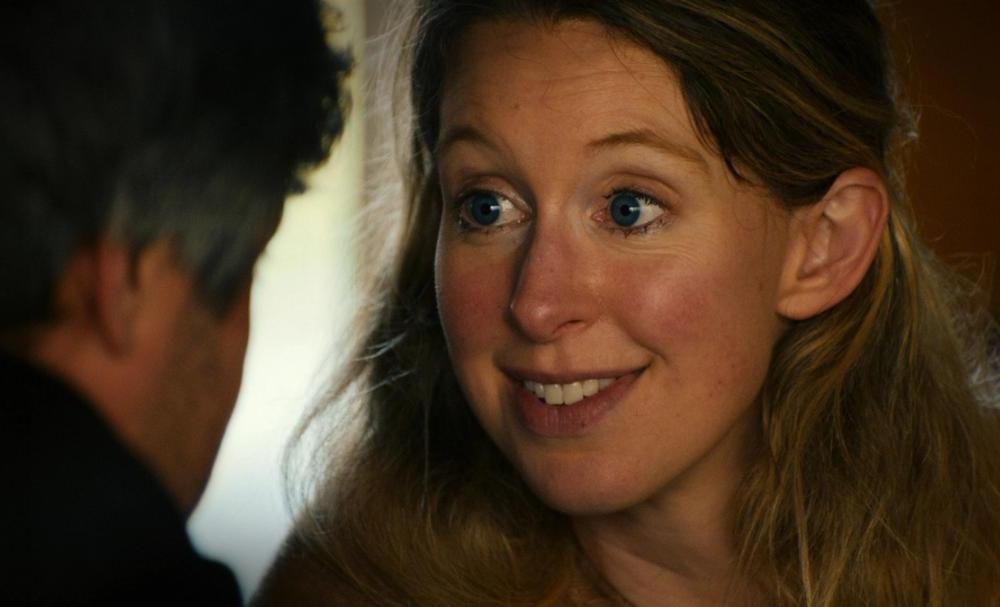
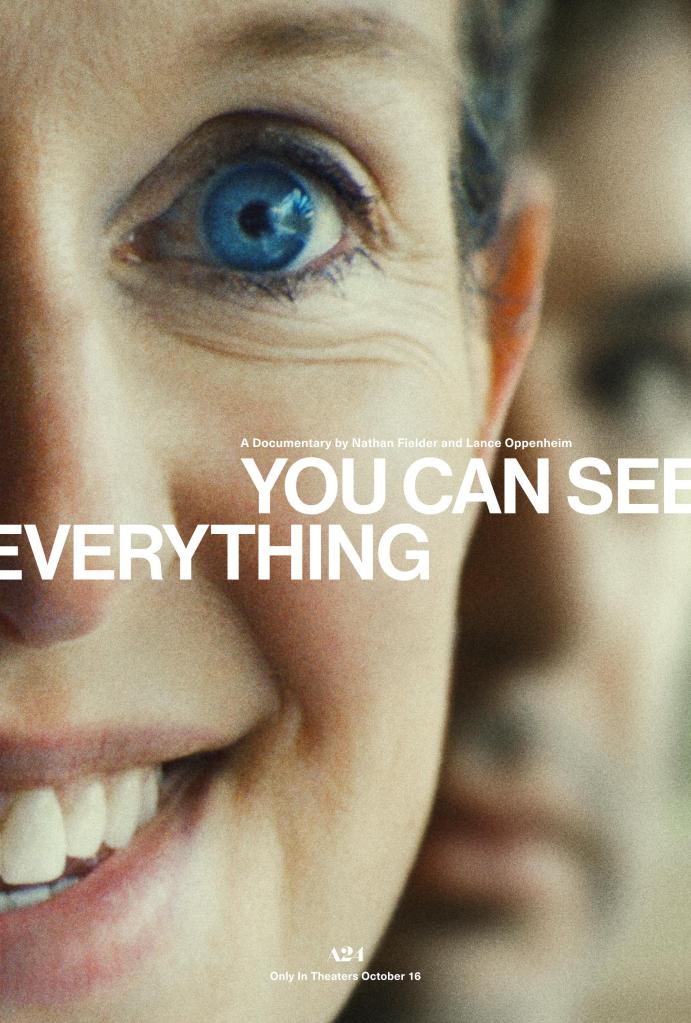
“You Can See Everything” is directed by Nathan Fielder (The Curse, Nathan for You) and Lance Oppenheim (Primetime, Some Kind of Heaven), and is a documentary centering around Elizabeth Holmes, the founder of health technology company Theranos. The film documents Holmes and her partner, Billy Evans, as the former gets ready for her 11-year sentence for defrauding investors.

It is time to finally discuss the film that everybody has been talking about. “You Can See Everything.” This is, quite frankly, a movie that I probably would have skipped had I not been doing this blog. I am not against documentaries, but I am not going to pretend I was overly familiar with this subject matter. Even when I was younger, I was not always up on the trends when it came to video games or television shows. When I had people in my life playing “Fortnite” or watching “Succession,” I never caught up. I did not have time or motivation. Movies are a different matter. I think many of you reading this have either heard of or seen this movie and want to know my opinion about it.
Having now seen the movie that has been dominating the collective conversation… It’s good.
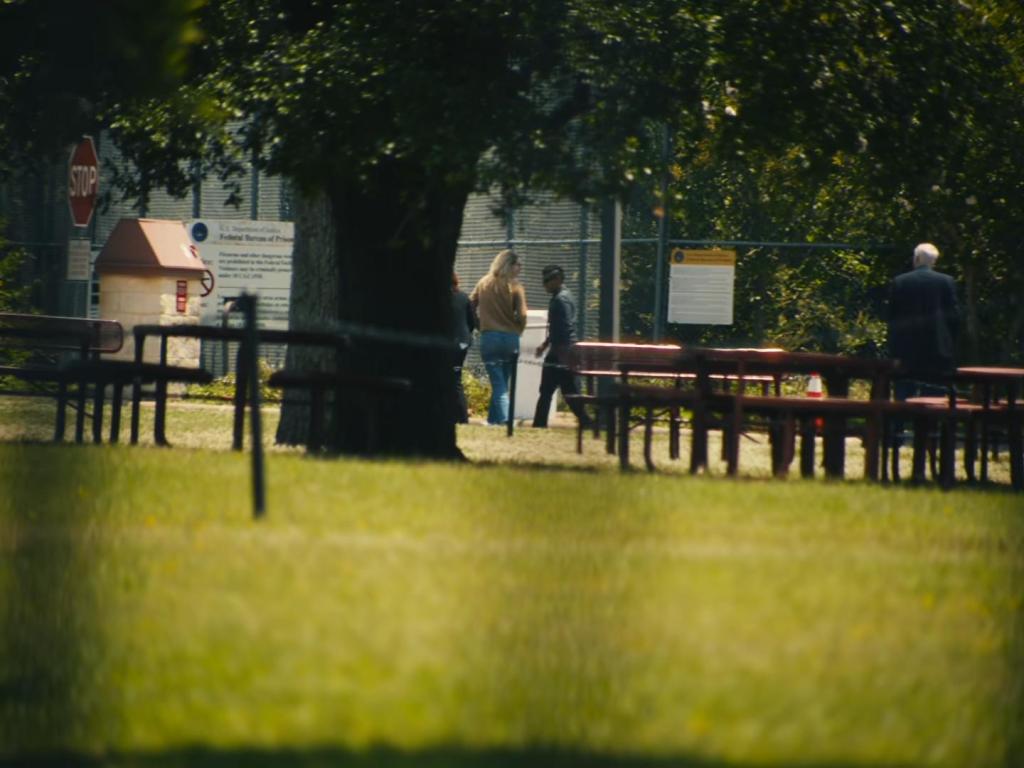
Going into “You Can See Everything,” I have been made aware of several people making the argument, including colleagues, that this film should be nominated for Best Picture at the Academy Awards. Keep in mind, no documentary in history has ever received such an honor. After seeing this documentary, I would disagree with that notion, but I can see why people would imagine that should be the case. I say that as I will admit, this documentary is clever in its execution. It relies on some unique, unexpected techniques and ways of telling the story. Some of these are fantastically built up.
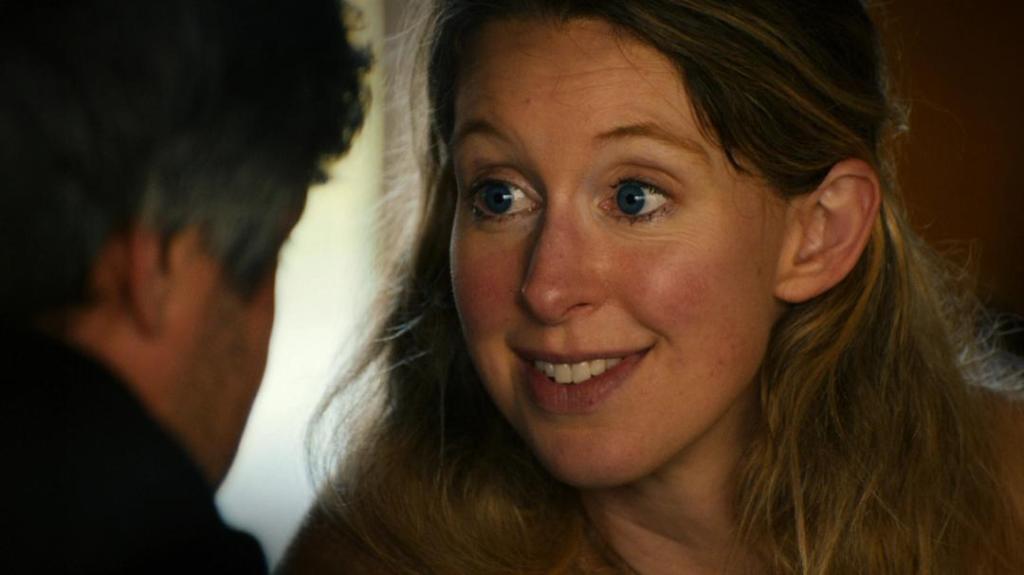
“You Can See Everything” is only one of a couple documentaries I watched in 2026. But regardless of the storytelling format, the filmmakers do an excellent job of going about it. The film often presents itself in such an uncomfortable manner. For starters, the film is shot in 4:3, a much thinner aspect ratio than how most projects are shot nowadays. This results in many shots feeling cramped, even in places that have lots of space. Upon seeing the film’s marketing, I was automatically intrigued by the framing. The close-ups of several people’s faces throughout the film feel consistently dense.
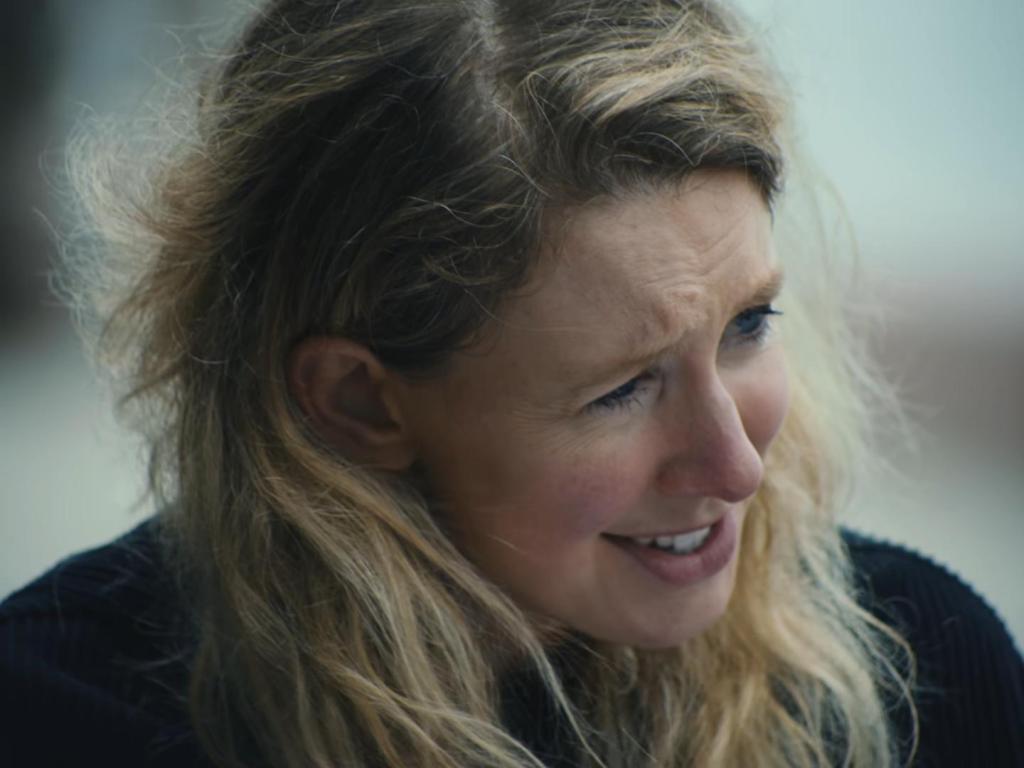
The film is also surprisingly funny. I let out a few big laughs at my screening. Quite frankly, there is one scene that allowed me to emit one of the most obnoxious laughs I’ve given through any movie I watched this year. Funny enough, perhaps literally, the most hilarious moment of the movie came up when Nathan Fielder was showing the documentary’s subjects the Abbott and Costello comedy sketch “Who’s on First?”. Watching people react to something many see as funny is already fascinating enough. Will these people laugh? Maybe their laughter will get me to laugh too. But that’s not the case. Not much laughing was going on in this scene, especially from main subject Elizabeth Holmes. I am not going to spoil much about what is said, but Holmes’ response to Fielder asking her what is “funny” about this bit had me cackling to the point where I was nervous my seatmates were gonna toss me to the ground for laughing so loud.
I will also give credit to this film for its effectiveness as a conversation-starter, even as someone who is not overly familiar, or absolutely interested with what it is about. I watched this movie with my mom. Once the film ended, we went to a restaurant to get some appetizers and discuss what we saw. This is not an unusual routine for us, but I found our discussion for this particular movie one of the more fascinating ones I can remember. One topic that came up was the recently mentioned “Who’s on First?” scene and Holmes’ response, that moment gave me the suspicion that Holmes has autism. It has not been confirmed whether Holmes has been diagnosed, but her facial expressions and way of experiencing things give me the feeling that Holmes is on the spectrum in some capacity. Despite the controversy surrounding her, she comes off as intelligent and kind. But the film seems to imply her quirks.
“You Can See Everything” is one of the few documentaries I have experienced that made me glad I was not spoiled before checking it out. There is a moment that this movie builds up to regarding a particular individual who has some sort of connection to Holmes that genuinely caught me off guard. I never would have expected this individual having any connection to the documentary, but it is something that took this documentary from being an entertaining few hours and turned it into something to remember.
In fact, this is not the only thing, because the documentary is more than just a piece about Elizabeth Holmes. As the documentary progresses, it unveils some of the behind the scenes details tied to it, and all of it is fascinating to say the least, especially considering how its subject matters handle certain key aspects that went into the production. At this point, the documentary almost became something else entirely. It is almost as if the movie were about how hard it was to put this documentary out rather than a piece about a particular person.
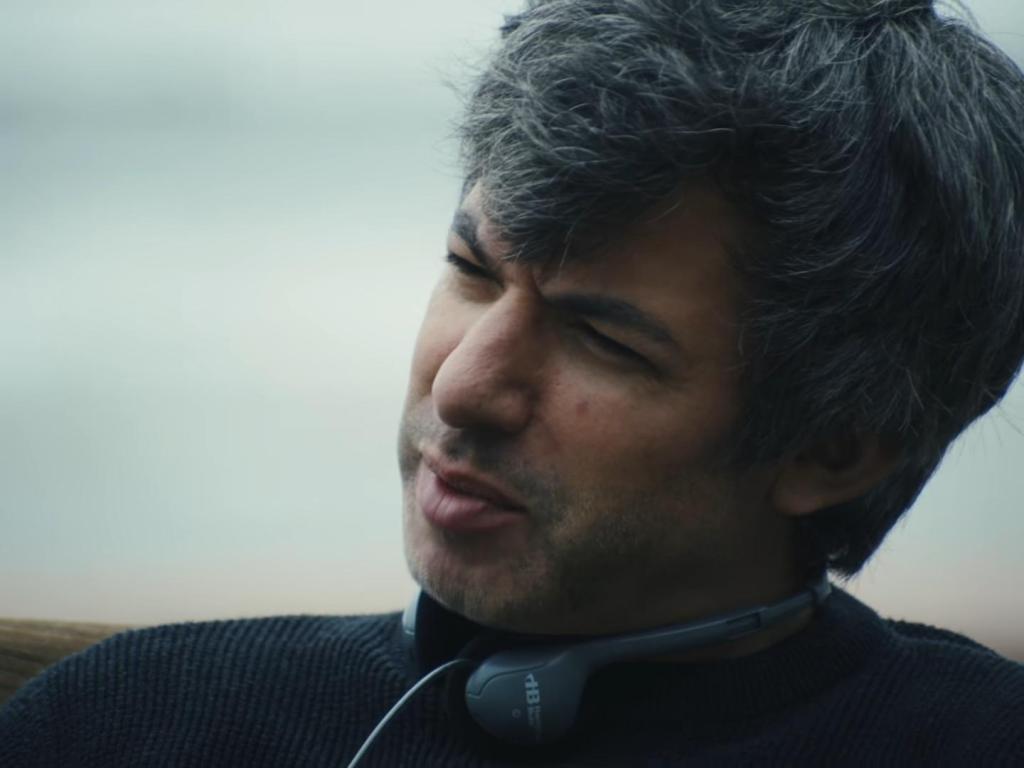
I said before that this film should not be nominated for Best Picture, and part of that reason is because while I enjoyed the movie for what it was, I think it could have been better if it were paced differently. At times, the pacing is decent, at others, it made me want to take a snooze. There are so many scenes, particularly towards the second half, that drag on like there is no tomorrow. Maybe Fielder and Oppenheim were going for a sense of atmosphere, but I did not buy what this movie was trying to sell me. It kind of took me out of the movie sometimes. Some scenes either take too long to get to the point, or they simply establish the point and take too long to move onto what’s next. I do not mind slow movies. “Blade Runner” is a prime example of how you can effectively drag out scenes for the sake of immersion. As for “You Can See Everything,” the movie is much more engaging and intriguing in its first half than it is in the second.
I honestly think the film could have used an intermission. I know exactly where I would have put it too. Going back to that individual who I would have never expected having a connection with the documentary, there is a key moment involving this person around the film’s halfway point that I thought would have been a great place to stop the film. It would allow the audience to digest what’s in front of them. Maybe the documentary could have stopped just before this person showed up to avoid certain spoilers slipping out in the lobby. Not that I do not trust today’s audiences, but we need one less person in the world going through a line of people raving about how Darth Vader turned out to be Luke’s father.
I think this movie theoretically could have been more suited to split itself into chapters of a miniseries rather than something that is standalone and feature-length. This is not to say the film is bad. In fact, I recommend watching it at least once. It is different, it is intriguingly uncomfortable, and well made. Give it a shot.
In the end, it is easy to see why “You Can See Everything” is dominating so many conversations. There is so much to unpack with this film that it is almost impossible to dissect all of it in one review. That said, I do not know if this film is going to have much replay value for me. It is fascinating story, but I do not know if it is one I see myself going back to. “You Can See Everything” does a lot of things. It entertains. It goes out of the box. It makes you ask questions. I appreciate the angle this movie takes and that alone makes it worth seeing at least once. I am going to give “You Can See Everything” a 7/10.
“You Can See Everything” is now playing in theaters. Tickets are available now.
Thanks for reading this review! As a reminder, in honor of Scene Before’s 10th anniversary, I am working on a video review series called Movie Requests. In this series, I ask celebrities what movies they think I should talk about. You can check out the latest episode featuring comedian Adam Conover, who suggested I should watch “To Live and Die in L.A..” To find out my thoughts on that movie, click the video above! And please subscribe to my YouTube channel and hit the notification bell to see more episodes as they drop.
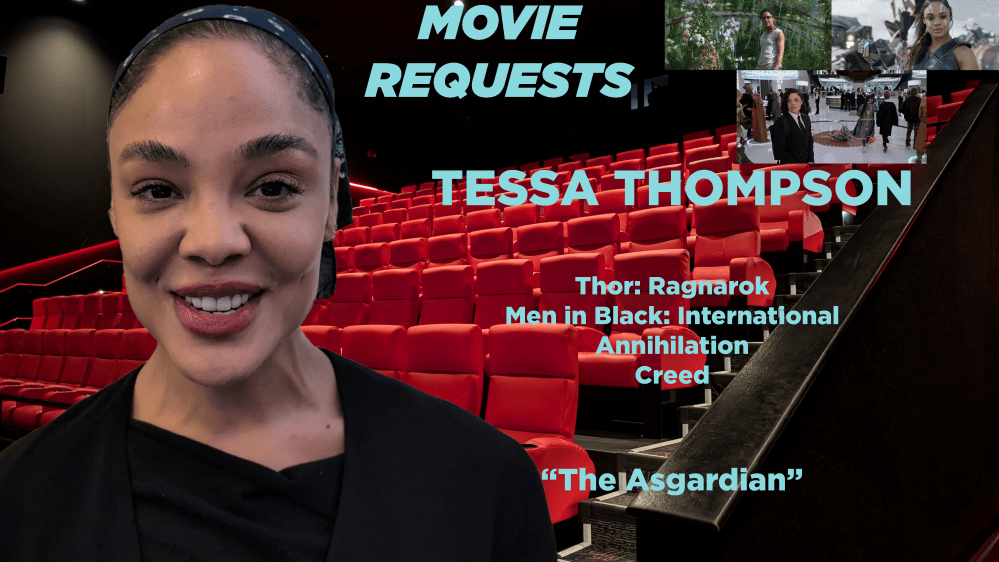
I am also happy to announce that the next episode is going to feature Marvel Cinematic Universe star Tessa Thompson! That episode will be available on Wednesday November 25th. Look forward to it!
My next review is going to be for “Wild Horse Nine.” Stay tuned! Also coming soon, I will be sharing my thoughts on “La Bola Negra,” “The Cat in the Hat,” “I Play Rocky,” and “Godzilla Minus Zero.” If you want to see these reviews and more from Scene Before, follow the blog either with an email or WordPress account! Also, check out the official Facebook page! I want to know, did you see “You Can See Everything?” What did you think about it? Or, what is a documentary that you found unique in its storytelling approach? Let me know down below! Scene Before is your click to the flicks!

