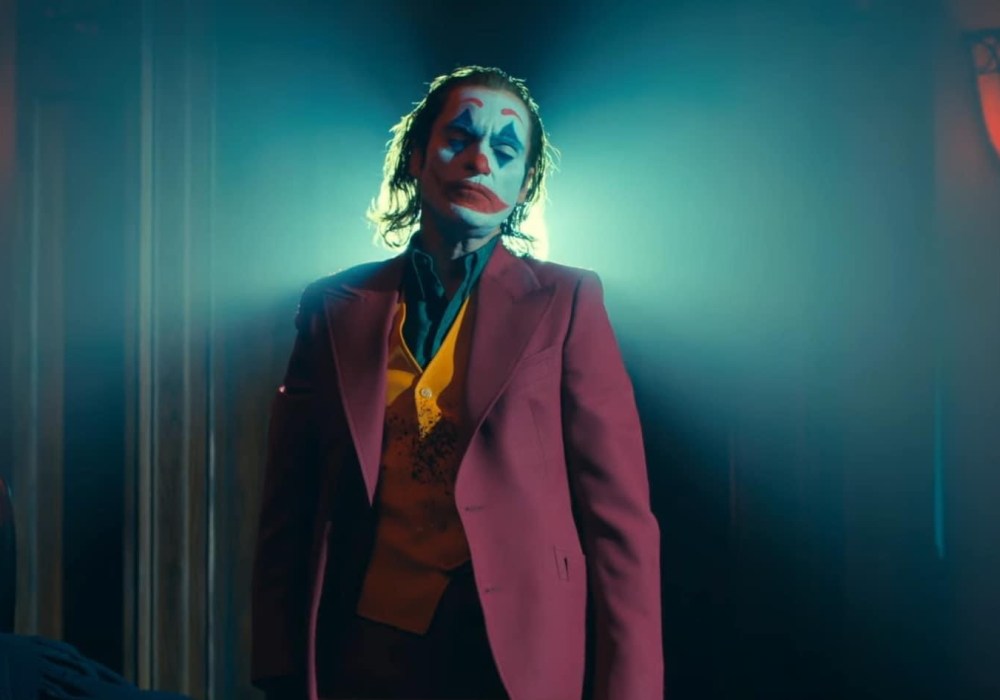

“Joker: Folie à Deux” is directed by Todd Phillips (The Hangover, War Dogs) and stars Joaquin Phoenix (Don’t Worry, He Won’t Get Far on Foot, Gladiator), Lady Gaga (A Star is Born, House of Gucci), Brendan Gleeson (The Banshees of Inisherin, Troy), Catherine Keener (Being John Malkovich, Capote), Zazie Beatz (Deadpool 2, Atlanta), Steve Coogan (Percy Jackson & the Olympians: The Lightning Thief, Philomena), Harry Lawtey (Industry, You & Me), and Leigh Hill (Fantastic Beasts and Where to Find Them, Game of Thrones). This is the sequel to the 2019 film “Joker” and once again follows Arthur Fleck who this time around meets the love of his life, Lee Quinzel, while incarcerated at Arkham State Hospital.
Comic book movies this year have been a fascinating ride. If you told me that we would be getting only one Marvel Studios film this year, multiple prominent R-rated titles, and another movie from the same writers who did “Morbius,” I would have you called you crazy. Just to recap, I loved “Deadpool & Wolverine” and I hated “Madame Web.” Those movies are on two opposite sides of the spectrum. The former might be my favorite movie of the year, while the latter might be my least favorite movie of the year. And for those asking, I did not see “The Crow.” Going into “Joker: Folie à Deux,” I assumed that this movie would fall somewhere between “Deadpool & Wolverine” and “Madame Web” in terms of quality because those are on two extreme ends of my quality scale. Statistically, it makes sense. But I also realize that there is a lot of potential that could be fulfilled with a “Joker” sequel.
I say there is a lot of potential that could be fulfilled with a “Joker” sequel while also realizing there is just as much of a chance that nothing good could come from it either. After all, we got this sequel for the same reason we get sequels to lots of other movies. Money. The original film made history by being the first R-rated title to make a billion dollars at the box office. And one can argue it deserved to make a lot of money. It was a well made film that not only differentiated from other comic book movies at the time, but it was a well-crafted, well-directed, well-acted story that highlights how some of society tends to look at mental health. In addition to its praise from other bodies during awards season, “Joker” was nominated for 11 Oscars and took home two. If you are an executive at Warner Bros. and you are looking at the financial success and extended conversation that came about because of “Joker,” chances are you would want to greenlight a sequel. Personally, if I were there, I would be a bit hesitant. The first film ends a on satisfying note and I am not sure where I would want to take the story next. But I do admire the sequel taking a big swing with the idea that there were going to be musical elements attached. That is something we do not see in stories based on comic books. Forget “La La Land,” I want to know more about “Ha Ha Land!”

There is no doubt that “Joker: Folie à Deux” takes big swings, and because of how much money the last one made, it is likely that this sequel could get away with a lot of them. But it misses on each one. “Joker: Folie à Deux” is a movie that does not really understand its own identity. I think there are times when movies can be a bunch of different things at once, but “Joker: Folie à Deux” does not stand out positively in regards to any of its disciplines. When it comes to being a jukebox musical, it is annoying. That is if it technically is a jukebox musical. We will get to more on that later. As a courtroom drama, it is a bore sometimes. There are select moments that kept me interested, but it is kind of off and on. As a sequel documenting Arthur Fleck’s progression as a character, there is almost no progression to be seen. Yes, we see him meet Lee and that plays a part in the story. But a good portion of the sequel is a reflection of what happened in the first film. There is nothing wrong with referencing consequences in a case like this, but the movie spends so much time reflecting on its past that it forgets to live in the present. Yes, the story is about the aftermath of its 2019 predecessor, but the movie does not do a ton to explore this character any deeper.
I enjoyed the first film. I found it to be a fascinating study on how a broken man like Arthur Fleck transformed into someone who became a face of chaos. I was invested in his story, his journey. I was not invested in Arthur’s arc this time around. Sure, there are moments that had my attention. But again, these are moments in an otherwise excruciating film. When you spend an extended period of time in court hearing about and reflecting on the events of a successful first movie, all that comes to mind is the idea that if I had time on my hands, I would probably rather go back and watch that movie again instead of this one.
It is kind of like what I said about “Furiosa” earlier this year, which was not horrible, but it ended in such a way where I thought I should go back and watch “Fury Road” again as opposed to the movie I just watched, which I found to be inferior.
“Joker: Folie à Deux” plays very much like the finale to the popular TV series “Seinfeld.” Much like that finale, “Joker: Folie à Deux” piggybacks off the success of its predecessor and fills so much time referencing said predecessor. Both projects spend a lot of time in court where said references come to life. But they are both missing a spark of what made the older material click. Both projects tend to put its main characters in uncomfortable positions. Not just in the story, as many projects should. But as a viewer, I can say I watched both of these feeling a bitter taste in my mouth. The “Seinfeld” finale goes out of its way to spoon-feed to the audience that its regular cast just so happen to be morons. “Joker: Folie à Deux” centers around someone who has a criminal history, which we have seen before. Without going into specific details, I do not need to watch “Joker: Folie à Deux” with the need to “root” for somebody who did what they did in the previous movie. But at minimum, I want to be engaged. And the film does not allow me to do that much.
I would like to talk about the film’s musical elements, that is if you can call them that or if the crew can actually confirm if this movie is a musical to begin with. Again, we will discuss more on that soon… Because the way I see things, this film fails miserably as a jukebox musical. Yes, there are no original songs. Did I recognize any of the songs in the movie as they were being performed? Sure. Could I tell you what the songs in the movie were if you ran into me on the street? Probably not. The lead duo’s singing in this film is kind of off and on. But when it is off, it is off. Never once was I watching these two and felt a complete sense of immersion. This is also really sad because I saw the movie at my local IMAX, which just so happens to be one of the few locations showing the movie in the brand’s coveted 1.43:1 aspect ratio, which is often used when shooting and presenting Christopher Nolan’s movies. When we get to the musical sequences, the screen goes from scope to IMAX and personally, I notice it. But not once do I “feel” it. This movie does not do anything to make its musical or singing sequences exciting. The ideas represented in each song do not change much. They are often a distraction from the story as opposed to a part of the story. Can Lady Gaga sing? Of course she can. But I am not going to pretend she does her best work here. If you want to see Lady Gaga sing like a champ on screen, just go watch the 2018 edition of “A Star is Born.” She is incredible in that.
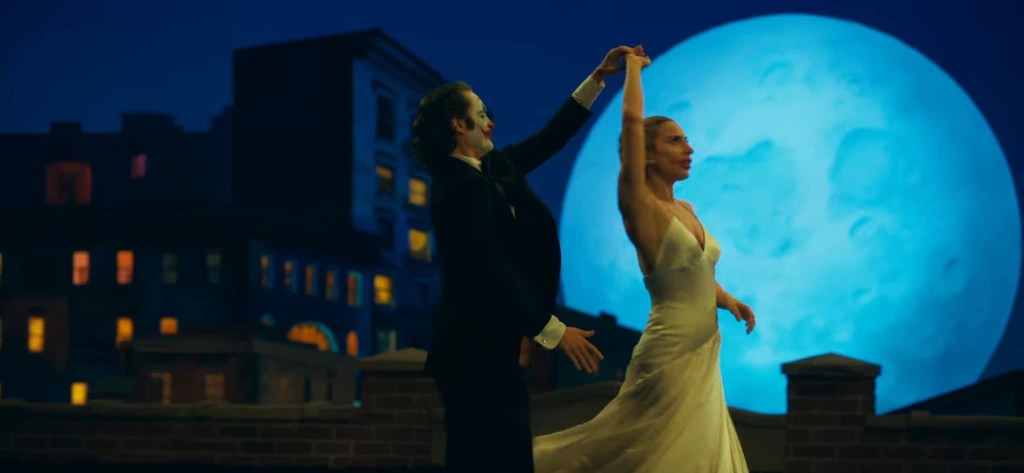
Although if there is one thing I like about the musical sequences, there is some cool set design. There is one sequence where we see the leads together in front of a clearly fake night sky with a “Hotel Arkham” in the background. I thought that set in particular was atmospheric. It looked nice. But the sequences themselves are sometimes a drag or simply outright unmemorable.

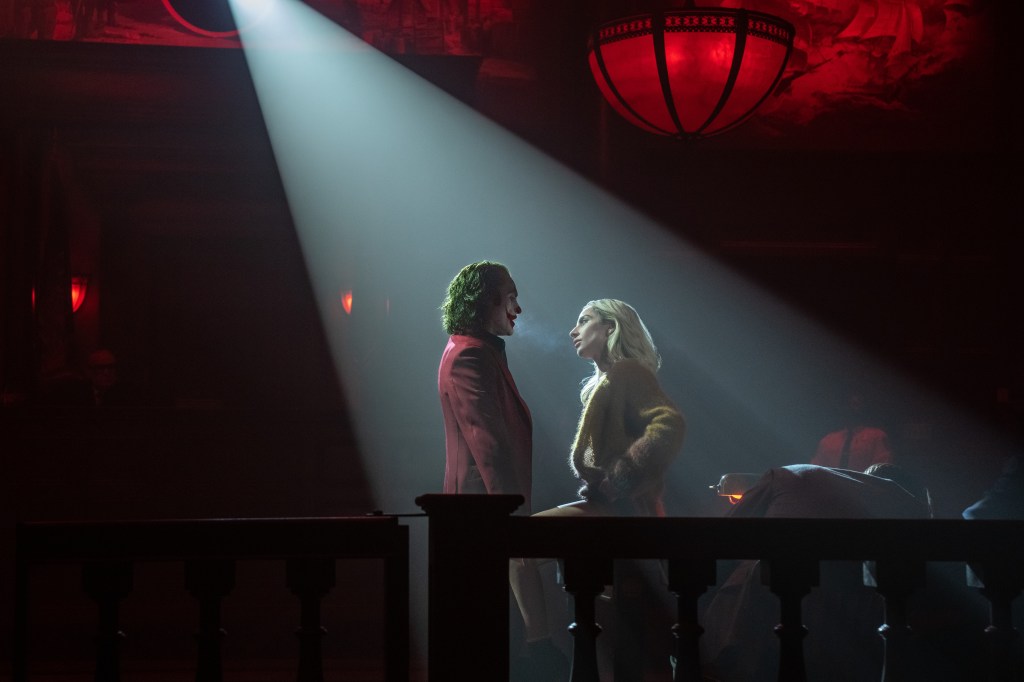
You might think I am not satisfied with these sequences because I have an agenda against musicals. To me, musicals are like any other genre, if there is a project in it that appears to be done decently, it has my interest. If you want a review for a musical that I think needs more attention, than check out my thoughts on Steven Spielberg’s “West Side Story.” I was looking forward to seeing what “Joker: Folie à Deux” can do with its musical elements. I knew that these elements were in the movie before I watched it. But I looked back at the marketing, and part of me wonders how good of a job the marketing team did at implying that this movie was going to be a musical. Every time I watched the teaser trailer and I saw the shot of the spotlight shining on Arthur and the scene with Hotel Arkham, I realized those moments were musical-like. I thought people would pick up on that. But I watched with this movie with my dad. In fact, we went to see “Beetlejuice Beetlejuice” together last month and the “Joker: Folie à Deux” teaser played in front of it. Maybe my dad’s trailer retention is not the greatest, but we ended up seeing this movie together too and he was not expecting a musical out of a film like this. For the record, he told me straight up, he does not like musicals. He made that clear when the film ended. Kind of like the first “Joker,” I respect this sequel for putting things in it that we do not usually see in a comic book-based film. I wanted all the musical shenanigans to work. But the singing was not the greatest. The songs were not that good. The movie kind of reminded me of “Dear Evan Hansen,” which did not work for me as a musical partially because the transitions to the numbers themselves did not come off as seamless as maybe they could have. They felt very out of place. There is one, maybe two numbers in the movie that feel natural in terms of that movie’s atmosphere. But that is about it.
Some of you might be reading this with the urge to ask several questions. For those who had no exposure to this movie, you may be wondering how musical elements got into the project to begin with. And others may wonder why the heck I am calling “Joker: Folie à Deux” a musical at all. Because if you ask one of its stars, Lady Gaga, or its director, Todd Phillips, they will say this film is not as much a musical, as opposed to a movie with a ton of music in it. If you ask me, “Joker: Folie à Deux” is simply a bad attempt at a musical. It is a musical that places its songs as an afterthought. I would like to use a quote from YouTuber Jeremy Jahns’ “Transformers: The Last Knight” review. This quote has more to do with that film’s pacing, but hear me out. “In the end, it’s how long a scene feels, not how long it actually is.” The same principle applies to this film’s identity and genre. Lady Gaga and Todd Phillips can try to sell me on the notion that “Joker: Folie à Deux” is not a musical as much as they want. But even though I sometimes think the phrase “the customer is always right” can sometimes be overused and presents cases where that is not always accurate, as a customer who bought a ticket to this movie, all I saw was a bad musical. That is what my dad who went with me saw too.

But let us say that “Joker: Folie à Deux” is somehow not a musical, and instead just a movie with plenty of singing. I do think there is a place in cinema for non-musical movies where the characters do a lot of singing. One example that comes to mind is Mamoru Hosoda’s anime, “Belle,” which is about someone who develops a virtual singing career. The moments where the lead character in that film sings occasionally play out like a musical. They’re visually creative and are presented in a massive scale, but those moments are not straight up musical sequences per se… Though there is one moment that takes a lot of inspiration from Disney’s “Beauty and the Beast.” But unlike “Joker: Folie à Deux,” each song in “Belle” effectively furthers the story and just so happen to be presented in sequences where not once did I have the illusion that a gun was locked right next to my head. Additionally, the soundtrack to “Belle” itself contains banger after banger after banger. I have found myself not just rewatching “Belle” at home more times than I would like to admit, but also listening to the songs from the movie in my spare time such as when I am in the car or when I am doing reviews like these.
Now that such an overblown, elongated, supersized rant about whether or not this movie is actually a musical is over, you might be thinking… Did I like anything about the movie? Well, yes.
For starters, the film does carry a few consistencies from the previous installment that also work the second time around. Joaquin Phoenix does a good job in the lead role. I do not think he is going to win an Oscar this year unlike he did in the first movie. But he puts on a captivating performance. Although to be fair on that “no Oscar this year” comment, I think the material this time around did him fewer favors than what he had in front of him for the first movie. Lawrence Sher also returned to do the cinematography, which like the first film, is really good. In fact, you could argue it was improved from the last movie. This film feels slightly bigger than the last one in terms of its scale. I do not know if I saw $200 million brought to the screen like the budget suggests, I would assume Joaquin Phoenix and Lady Gaga got a good chunk of that money. But as I mentioned earlier, I like how the movie uses IMAX technology. Judging by everything I said so far, you can probably tell I am in no rush to buy the Blu-ray. But I hope if they do put one out, Warner Bros. allows the release to show an expanded aspect ratio during the IMAX scenes. Another consistency that I love in this film is the score. Like Joaquin Phoenix did for Best Actor, Hildur Guðnadóttir won an Oscar for her work on the original film in the category of Best Original Score. Personally, it was not my favorite score of the year. I think Alan Silvestri’s music in “Avengers: Endgame” was that year’s winner for me. That and Michael Abels’ work on “Us” was quite good too. But I remember hearing the “Joker” score and it captured the dark tone the film carried at times. It is not exactly depressing, but can easily induce a sense of discomfort. And “Joker: Folie à Deux’s” score does the same thing. It really shows how good your score is when an image or scene of the movie from which it originates comes to mind, and when you are thinking about said image or scene, you hear a glimmer of that score in your head at the same time. When I think about “Star Wars” sometimes, I will think of a certain moment and easily attach John Williams’ music to that thought. Hildur Guðnadóttir’s work has that power in both the original film and this sequel.
There is also one scene in the movie that I will not go too heavily into because it does involve potential spoilers, but there is a moment where Arthur is asked to sign someone’s book. While the autograph is being written, the person who gave the book says something that prompts a certain reaction out of Arthur. “Joker: Folie à Deux” is a movie that unlike many other comic book-based projects, does not have many laughs. But knowing what this movie entails, it does not need them. This one moment in particular though was hilarious. If you somehow drag yourself to the theater to check this monstrosity out and remember this part of the review, you will know which scene I am talking about when it comes up. It was a highlight of the movie for me.
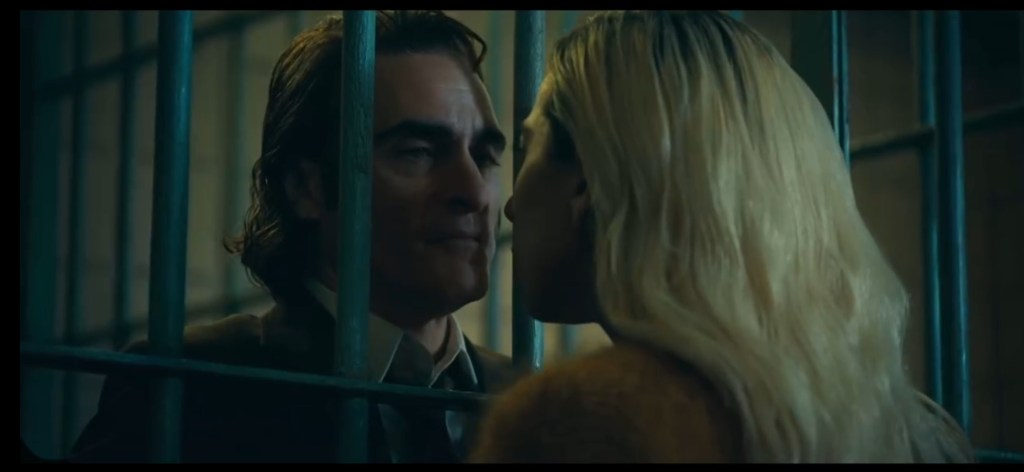
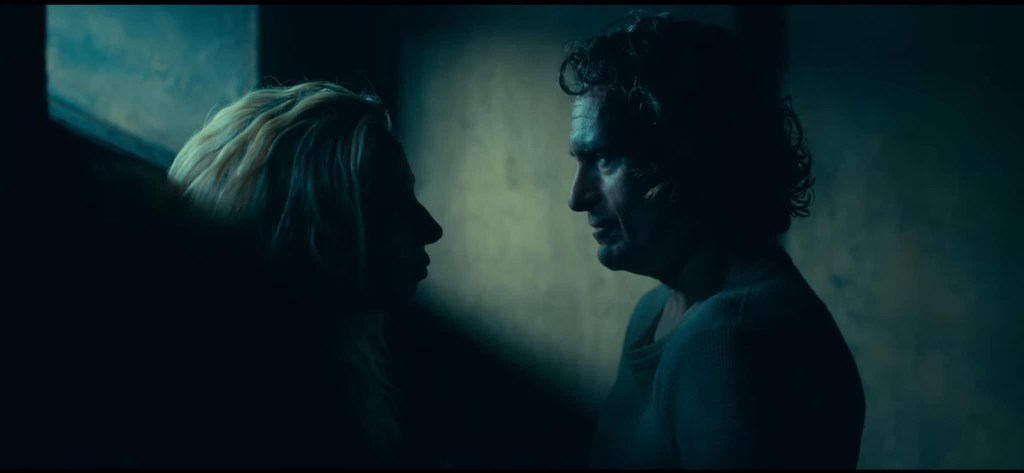
The film also tends to maintain consistency with other stories about Joker and Harley Quinn, or in this case, Arthur and Lee. In the story, these two, as much as they like each other, show signs that they may not be the best match. I thought the film at times does an okay job at highlighting that. But at the same time, whether it was trying to highlight that or not, as I watched Joaquin Phoenix and Lady Gaga together on screen, those two actors honestly could have played off each other a little better. Watching these two together felt awkward at times. Was discomfort the point when it comes to this film’s lead couple? You can definitely make that argument. But the discomfort was exactly as it sounds. Straight up uncomfortable. I was not marveled by the two leads of “Joker: Folie à Deux.” If anything, they were missing a spark. Yes, they are played by recognizable people with talent, but their talents do not lend themselves to this movie.
For the record, “Joker: Folie à Deux” has been out since early October, so chances are some of you reading this have seen the movie, but for those who have not, I will not spoil the ending. That said, we are going to talk about it. First off, it comes out of nowhere. Second, unlike the first movie, it does not feel satisfying. It is one of those endings that when you see it, you are left wondering if they forgot to finish the movie. Sure, it is somewhat conclusive, but there is a feeling of emptiness that comes with it. Is the ending bold? Perhaps. But again, this is another swing and a miss. Having seen this ending, it is a final note that would have honestly worked better if it were attached to the first movie. Knowing the climax of the first movie and how that all goes down, I think that if the climax of that first movie, as it was, came to an end, we see Arthur in jail, and a particular chunk of the second movie’s ending were implemented into the first, I think it would have been a better fit. In fact, as I said, I do not have anything against the first movie’s ending. But I think if that recently mentioned chunk were used to cap off the first film, it would have made for something incredible. It might be an ending that I would be talking about on a positive note for years to come. It would have been clever. The ending to “Joker: Folie à Deux” is a slap in the face. It left me speechless, confused, and a bit broken. The movie could have been a continued progression of the title character, or at least his alternate identity, but almost refuses to give any interesting expansion to him at all. And it culminates with maybe the most baffling ending I have ever seen in a movie based on a comic book.
This is one of those endings that tries so hard to be clever, but it fails to get any raw reaction out of me. It is the below freezing icing on the heavily wax-induced cake that is “Joker: Folie à Deux.” It is a contender to be the most controversial film I have reviewed in years. It is a film that seems to be confused in what its audience is. I found a decent number of people on the Internet who enjoyed this movie, but there is a reason why if you look at the box office, another clown-centered film, “Terrifier 3,” which for the record I do not plan to see, is currently finding its people and “Joker: Folie à Deux” is not. It appears to understand its purpose and who it is for. At the box office, “Joker: Folie à Deux” had the biggest second-weekend drop in comic book movie history. Clearly, I am not alone when it comes to adding to this film’s bad word of mouth. While this movie has some okay parts in it and looks nice, it is nowhere near enough to outweigh the pile of garbage that toppled me throughout its poorly paced runtime.

In the end, “Joker: Folie à Deux” just so happens to be a joke itself. But am I laughing? Absolutely not. There is a common consensus about sequels that they are usually not as good as their predecessor, but rarely do I recall seeing a step down as massive as this one. If anything, “Joker: Folie à Deux” reminds me of say my transition from “Star Wars: The Force Awakens,” one of my favorite films in the franchise, to “Star Wars: The Last Jedi.” If you read my review for “The Last Jedi,” you would know that I gave that film a positive grade when it came out. But the more I thought about the movie, and after rewatching it, the less I liked its story choices. And “The Last Jedi” and “Joker: Folie à Deux” are kind of similar in some ways. Both films look beautiful. They have good scores. But I am not a massive fan of the directions they took the story and certain characters. I wish we got something different with them. “Joker: Folie à Deux” only manages to support my thoughts that this property would have been better had the timeline just been one and done. I did not see the point of this movie other than to make a quick buck. Going into the movie, I would have argued it could have garnered some awards talk because of the previous film’s success, but this film is not receiving the best word of mouth. If I were to picture this movie’s fate at next year’s Oscars, I think it will have a chance it being nominated for several technical categories. But I do not know if it will get any of the big ticket ones like screenplay, director, actor, or picture. “Joker: Folie à Deux” is not even the worst comic book movie of the year. This sequel has the abomination against humanity known as “Madame Web” to thank for that. But “Joker: Folie à Deux” is probably the biggest disappointment I have seen in a long time. I was looking forward to this movie. I thought it had potential. But all I saw was an iffy courtroom drama with bad musical and singing sequences, an underuse of Lady Gaga, a series of unmemorable events, and a big fat dumb ending. I am going to give “Joker: Folie à Deux” a 2/10.
“Joker: Folie à Deux” is now playing in theaters everywhere. Tickets are available now. Plenty of seats are available, I guarantee it!
Thanks for reading this review! My next reviews are going to be for “Look Back,” “Piece by Piece,” “Saturday Night,” and “Megalopolis.” If you want to see these reviews and more from Scene Before, follow the blog either with an email or WordPress account! Also, check out the official Facebook page! I want to know, did you see “Joker: Folie à Deux?” What did you think about it? Or, what is the biggest step down in a franchise you have seen from a certain installment to the one that came after it? Let me know down below! Scene Before is your click to the flicks!
 Scene Before
5 comments