A Real Pain (2024): This Short Road Film is a Real Thinker, and a Real Mover

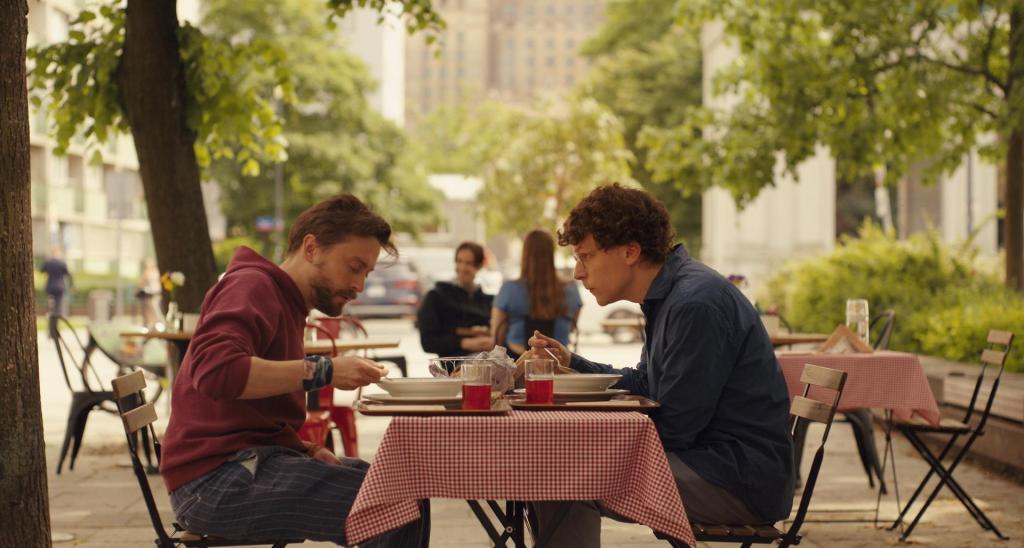
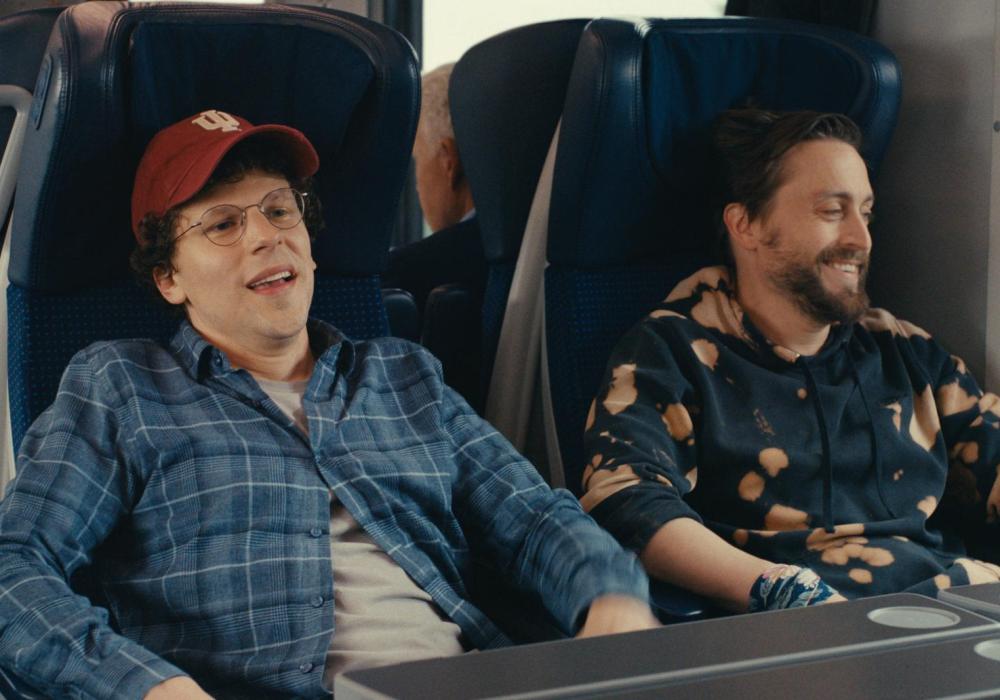
“A Real Pain” is written and directed by Jesse Eisenberg (Batman v. Superman: Dawn of Justice, The Social Network) who also stars in the film as David. Alongside him is Kieran Culkin (Scott Pilgrim vs. the World, Succession) as his cousin, Benji. Also in the film are stars including Will Sharpe (The Electrical Life of Louis Wain, The White Lotus), Jennifer Grey (Dirty Dancing, Ferris Bueller’s Day Off), Kurt Egyiawan (The Exorcist, Skyfall), Liza Sadovy (A Small Light, EastEnders), and Daniel Oreskes (Law & Order: Organized Crime, Only Murders in the Building). This film is about two cousins who take a trip to Poland to see various spots throughout the country, in addition to their late grandmother’s house.

© 2024 SEARCHLIGHT PICTURES

I saw the teaser trailer for “A Real Pain” a few times in the theater, and it piqued my curiosity. I know there is a longer trailer out for the film, but for whatever reason I never got around to watching it before the film released. But the teaser had a brisk pace, gave promising chemistry between two leads, and some quickly delivered dialogue back and forth. It was by no means my most anticipated movie of the year, but it was one that if I got the chance to watch it, I would take it. Thankfully, a friend and I got to watch it over its opening weekend.

This movie has a 90 minute runtime, but it delivers a lot of material despite being a short watch. Again, I watched the teaser trailer, so I know it involved two people visiting land far from home, but I did not exactly know the movie’s true premise. Because I watched the teaser, which set the tone for the film, gave a glimpse of some of the scenes, some of the characters. But it left me with the impression that this was going to be a buddy travel flick between two people. Maybe even with a heist element considering the first shot of the teaser shows our main duo hopping train cars.

As for that last part, I was way off. “A Real Pain” is not a heist movie. I am not saying I am disappointed, it is just not what I expected. It is, however, as I correctly predicted, a buddy travel flick. And like some other movies involving long trips, it is between a couple people who have varying personalities, lifestyle situations, and habits.

© 2024 SEARCHLIGHT PICTURES

You have the more accomplished David (Jesse Eisenberg) who has a wife, has a family, has a career, and lives in New York City. He is paired up with his cousin Benji (Kieran Culkin), who we come to realize has a way of easily charming strangers. But he also has a lot of quirks, some of which certain people would find annoying. I like the diversification of these two and both actors play off each other well.

I have no idea how most audiences are going to see Culkin’s character through their personal tastes. Whether they end up liking him, thinking he is too much, or if he is a nuisance. He can be a bit much. But there is no denying that he is raw. Yes, Benji may come off as a manchild who refuses to leave the nest, but there is more to his life than meets the eye. It is not my favorite performance of the year, but it could be one worthy of some awards contention. It is easily the standout performance of the film and that says something because Eisenberg holds his own as David.

© 2024 SEARCHLIGHT PICTURES

The film features the two leads on vacation in Poland, but I would not call their adventure an escape. The two cousins, who are Jewish by the way, are there to see various Holocaust-related sites along with the home of their late grandmother. For the record, I am not Jewish, but even as someone who is not Jewish, I have to imagine seeing certain places that these people end up visiting can elicit a number of negative emotions. To think about what these places stood for, what people did in said places, it shows the dark side of humanity and leaves one to wonder how we got to where we are now. Around the midway point of the film, our characters end up visiting a concentration camp used during the Holocaust. They get a tour of the site, including the inside of a gas chamber. When we get to this point of the film, there is no music, minimal sound, nothing more than occasional dialogue. I sometimes talk about immersion on Scene Before, but that word is typically used in relation to something spectacular or hyperactive like a big battle sequence or a race between cars. This movie immersed me through its minimalistic tendencies. The movie was literally as empty as I felt watching it. I almost did not know what to say or think other than, “Why?”

There are a couple movies that come to mind if I were to compare “A Real Pain” to something else. Specifically, “Jojo Rabbit” and “Life is Beautiful.” Not only do the films deal with the events of World War II and the Holocaust in some capacity, but both films, perhaps by the miracle of a god, manage to find humor in the darkest of situations. All of the humor feels natural. You could even argue it is cathartic. It is an escape from the harsh reality people had to deal with. Sort of in the same way some see music or books. Heck, I sort of view movies in the same light. It is an escape from reality. This movie, like many others, let me leave my world for a little more than an hour. But it simultaneously does a great job at showcasing the wrongs of someone else’s.

Keeping the title of this movie in mind, “A Real Pain,” that is something this movie highlights in a variety of ways. Some people deal with pain by crying, others reflect, others pray. As far as Benji goes, he is a complicated individual who tends to hide whatever pain he is holding back for a period of time until he suddenly breaks. We see David kind of go down a similar path, but he seems to do a better job at keeping his emotions in check. We sometimes find out the effects the cousins come to discover as a result of their grandmother’s death. “A Real Pain” is a film that deals with the universal concept of grief. It also deals with the complication of life after a great suffering. There is a moment during the train ride where Benji questions whether it is right for him and others onboard to be sitting inside a high quality vehicle in first class. He questions whether something like this is justified after many people several decades ago dealt with one of the worst events in all of history. I cannot pretend “A Real Pain” is perfect. I think some people will end up finding Benji to be a little hard to handle at times, and there are a couple scenes that despite his character feeling real, I thought he was written to be a tad over the top. But “A Real Pain” delivers on a lot of things a great story can do. It makes you laugh. It makes you cry. It makes you sympathize with different characters. This is not my favorite film of the year, but I will not deny it nails a lot of things on the head.

© 2024 SEARCHLIGHT PICTURES

In the end, “A Real Pain” is a real deal. With the help of a great cast and a singular vision from Jesse Eisenberg, the film manages to find light in darkness. I cannot recommend the film to everyone, but even if you are an easy person to make cry during movies, I think there will be a fair amount of joy and laughs to balance that out. I have no idea what Jesse Eisenberg has up his sleeve next behind the camera, but if it is as good as this, I will be happy. I am going to give “A Real Pain” an 8/10.

“A Real Pain” is now playing in theaters. Tickets are available now.

Thanks for reading this review! My next reviews are going to be for “Y2K,” “Juror #2,” “Wicked,” and “Smile 2.” If you want to see more from Scene Before, follow the blog either with an email or WordPress account! Also, check out the official Facebook page! I want to know, did you see “A Real Pain?” What did you think about it? Or, what is a film that you think perfectly balances light and darkness? Let me know down below! Scene Before is your click to the flicks!

Gladiator II (2024): This Is Why I am Here… 24 Years Later

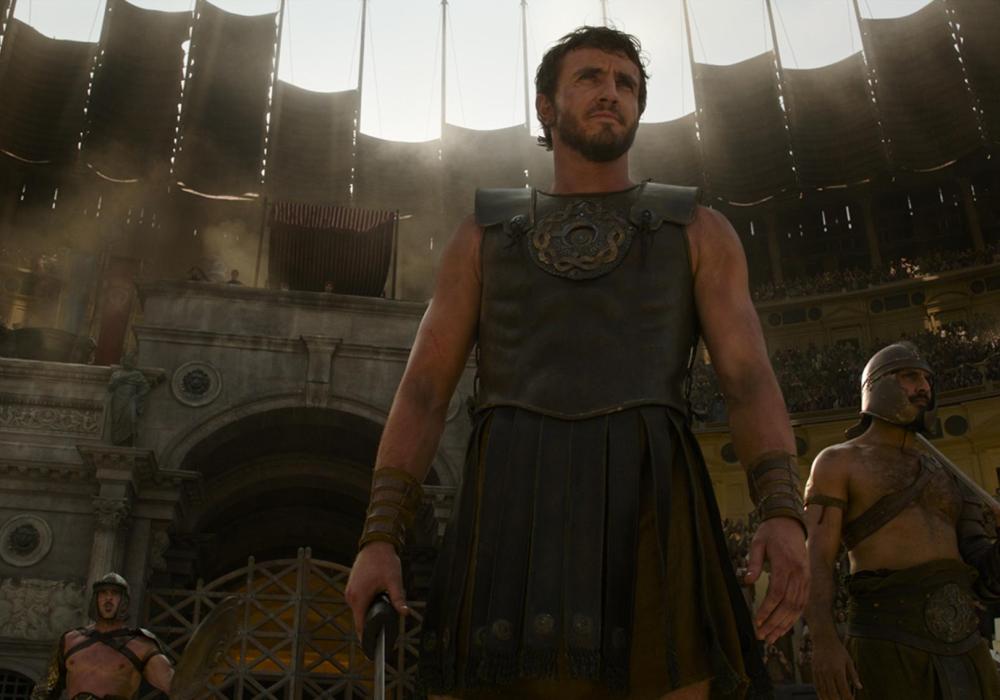
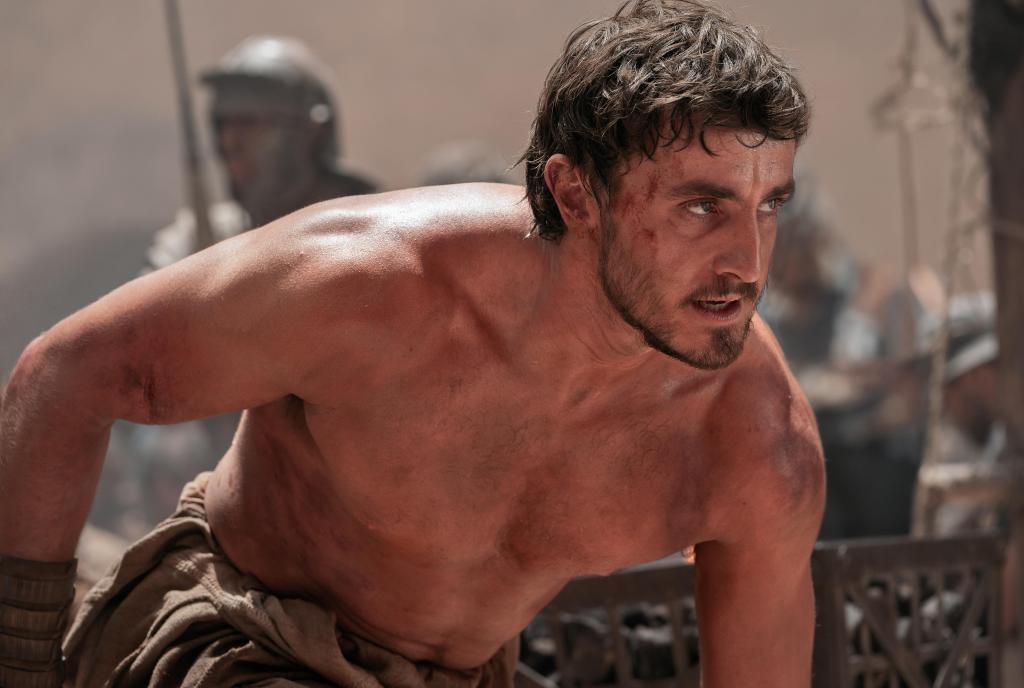
“Gladiator II” is directed by Ridley Scott (Blade Runner, Alien) and stars Paul Mescal (Normal People, Aftersun), Pedro Pascal (The Mandalorian, The Unbearable Weight of Massive Talent), Joseph Quinn (A Quiet Place: Day One), Fred Hechinger (Thelma, Eighth Grade), Lior Raz (Hit & Run, Fauda and Segev), Derek Jacobi (Last Tango in Halifax, Vicious), Connie Nielsen (Wonder Woman, Nobody), and Denzel Washington (The Equalizer, The Siege). This film is the sequel to the 2000 film “Gladiator” and this time follows Lucius, a slave who seeks revenge against General Acacius after his army invades his home. Doing what he can to avoid death, Lucius must survive in the Colosseum while his mentor plans to overthrow twin emperors Geta and Caracalla.

To this day I have only seen the original “Gladiator” once. As for the one time I saw it, I found my experience to be quite positive. In fact, it is one of Ridley Scott’s better films. When “Gladiator II” was announced, a couple thoughts ran across my mind. My first thought was “Why?” Not just because it is the latest in an endless barrage of sequels, but of all the stories people could have done, “Gladiator” is not one that I would have imagined needed to be continued. In fact, if you remember how the first film ends, it made me question if the franchise would have to defy logic in order to keep going. But in the case of the “Gladiator” franchise, whereas I previously imagined the name pertaining to one person, particularly Maximus from the first film. This sequel proves that “Gladiator” is more than just Maximus. The “Gladiator” name is more of an idea than anything else. Because this time we are focused on Lucius, who also appeared in the original film in the form of an eight year old boy.

If anybody remembers “Star Wars: The Force Awakens,” chances are you or someone you know has said the movie is a copy paste of the 1977 franchise original. For the record, “The Force Awakens” is still my favorite film of 2015, partially because while it gets back to basics, it utilizes those basics really well. The film does a great job fleshing out its characters while also delivering action and flying sequences that are much more epic to look at than what we got in the 70s. “Gladiator II” is in a somewhat similar boat. For the record, I do not think the first “Gladiator” is as good as both of those “Star Wars” installments, but I do recognize the Academy Award Best Picture winner for its technical achievements, stellar action scenes, and killer lead performance from Russell Crowe.

Structurally, “Gladiator II” is much like the original, where the film is about a slave fighting for their own freedom. A lot of the steps and challenges our protagonist has to face is similar to the ones Maximus faces in the 2000 predecessor.

That said, while I was invested in Lucius’ journey in this second film, I think Maximus’ journey in the first installment is more compelling. Part of it is because the journey, despite some differences, is like watching the first movie all over again. I would not call it the Dollar Tree version of that journey. It has more pizzazz than that, maybe Five Below would be a halfway decent retail equivalent to use in this case. Part of why I was not as compelled by this sequel compared to the original may be because of Paul Mescal’s performance.

For the record, do not think I am dissing on Paul Mescal as an actor. Mescal does not just a good, but a great job in this film. His performance is commendable and he fits the role he is given. But the thing about Maximus from the first movie, I almost cannot see anyone other than Russell Crowe playing him. On the other hand, I can probably imagine a few other people filling Lucius’ shoes. In fact, not only can I imagine it, I have concrete evidence to prove it! We have already seen Lucius in the first “Gladiator” as a young boy! And that actor did not even come back for this sequel. The guy was not even asked if he wanted to return in the first place! I know Paul Mescal is like a decade younger than Spencer Treat Clark, but still, age comes after everyone in Hollywood these days.

While Mescal’s portrayal as the film’s lead is no Russell Crowe, if the Oscars were tomorrow, I think one performer in “Gladiator II” would have my vote for Best Supporting Actor, and that is Denzel Washington. One thing I noticed about some of the performances in “Gladiator II” is that they would sometimes be delivered with some hyperactivity. Sometimes it works, sometimes it does not. In the case of Denzel Washington, it not only works, kind of like Russell Crowe in the original “Gladiator,” I cannot see anyone else playing Washington’s character. And the more I watched him through the movie, the crazier he became. There are some things this character does in this movie that elevate his already commanding presence in certain scenes. I would like all of you reading this to find out what some of those things are yourselves. No spoilers. But Washington easily gives one of my favorite performances of the year.

Other than Washington, perhaps the biggest highlight of “Gladiator II” should come as no surprise, the action. The action takes a lot of what is good in the original and puts its own spin on it. It is brutal, smoothly shot, and sometimes tries to fit as much information onto the screen as possible. I knew the action in this film was going to be exciting as soon as it began. There is a sequence in the first few minutes that almost looked like a fun third person video game.

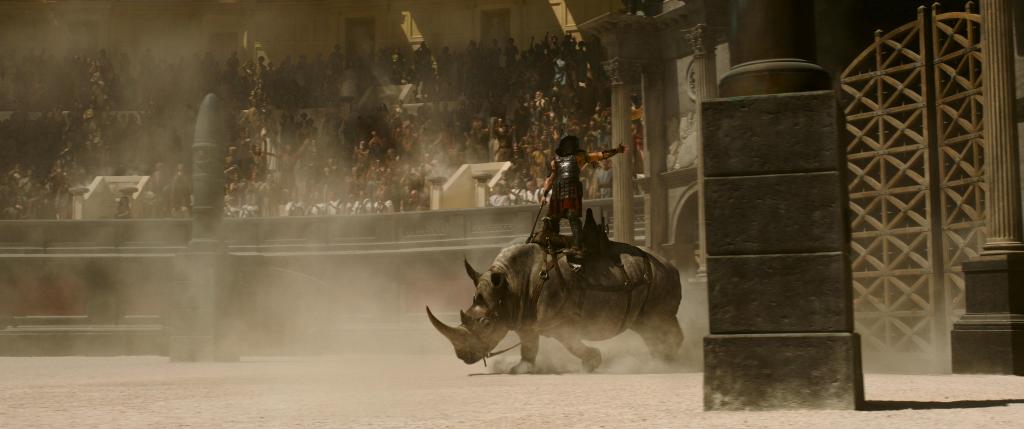
As for the fights in the Colosseum, those do not disappoint. That said, if you are looking for historical accuracy, that is where this movie may not be for you. I am not going to spoil the sequence in the arena that caught me off guard, but if you like your movies to be representative of practical events in history, you may not be a fan of this sequence. That said, I was a fan. A big one at that.

That is not the only historical liberty this movie takes. There is a moment where we see one of the characters reading a newspaper. Only problem, the printing press had not been invented until 1200 years after this film takes place. The more I think about “Gladiator II” and the glorious experience it gave me, I recognize that some of my positives regarding the film require me to bend logic and what I know about history. If I watch this film at home, chances are I could have a different opinion, a different mood perhaps. But from the second row in a crowded auditorium, I was onboard even during the more flawed moments. If anything, I will use the “Tenet” philosophy… “Don’t try to understand it, feel it.” And felt it I freaking did.

In the end, “Gladiator II” is a thrilling, captivating movie that takes you on an exciting ride through ancient Rome. It is not Ridley Scott’s best movie, but much like the original he directed more than two decades ago, the movie nails its atmosphere and delivers a completely riveting experience. The movie is chock full of different kinds of performances ranging from grounded to hyperactive to downright demented. I believed in all of them. Despite what I said about Paul Mescal, do not get me wrong, he truthfully kills it in the film. I cannot wait to see what he does next. As far as action goes, the movie has some cool kills and bloody finishes, but as far as this year for cinema goes, “Dune: Part Two” is still significantly superior in that department. But if you are looking for a fun time at the cinema, this is a solid option. I am going to give “Gladiator II” a 7/10.

“Gladiator II” is now playing in theaters everywhere. Tickets are available now.

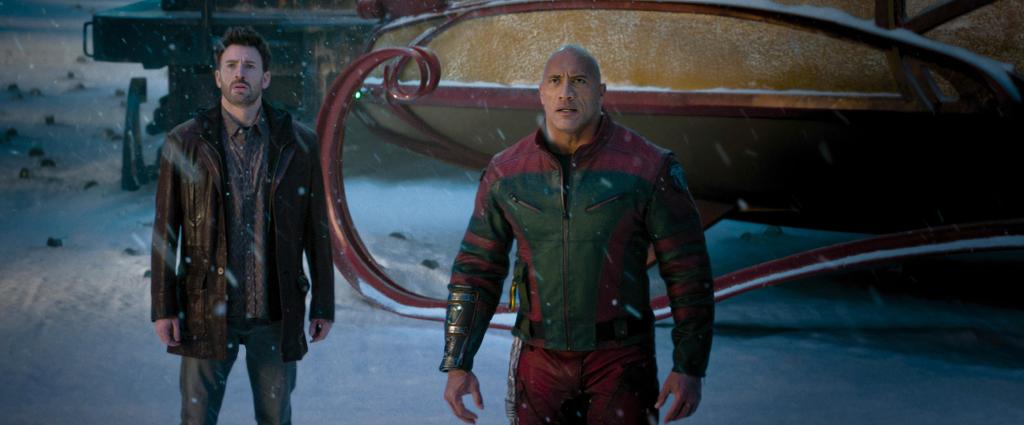
Thanks for reading this review! Some of you reading this post might be asking if I took part in the Glicked, Wickedator, Wickedglad double feature whatchumacallit. To answer that, I can tell you I did watch both “Gladiator II” and “Wicked,” but not back to back, but I did see “Wicked.” That review is going to wait awhile. As for my next review, that is going to be for the brand new holiday-themed action flick “Red One,” starring Dwayne Johnson and Chris Evans. You can also expect reviews soon for “A Real Pain,” “Y2K,” “Juror #2,” and THEN you will see my review for “Wicked.” Hope that is not too terribly long of a wait. If you want to see these reviews and more from Scene Before, follow the blog either with an email or WordPress account! Also, check out the official Facebook page! I want to know, did you see “Gladiator II?” What did you think about it? Or, which of the “Gladiator” films do you prefer? Let me know down below! Scene Before is your click to the flicks!
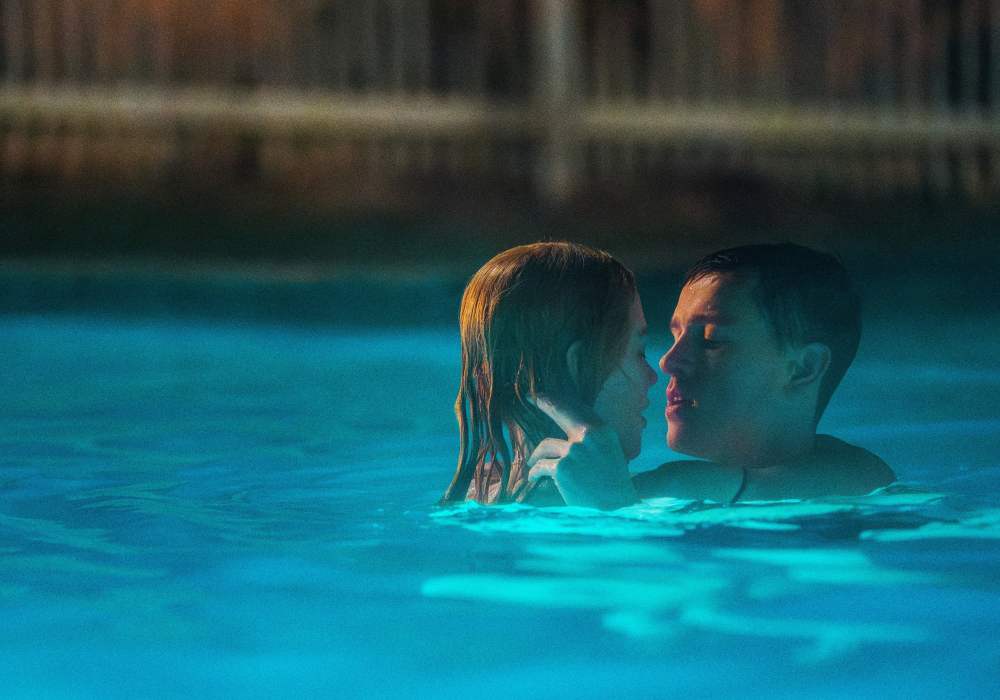
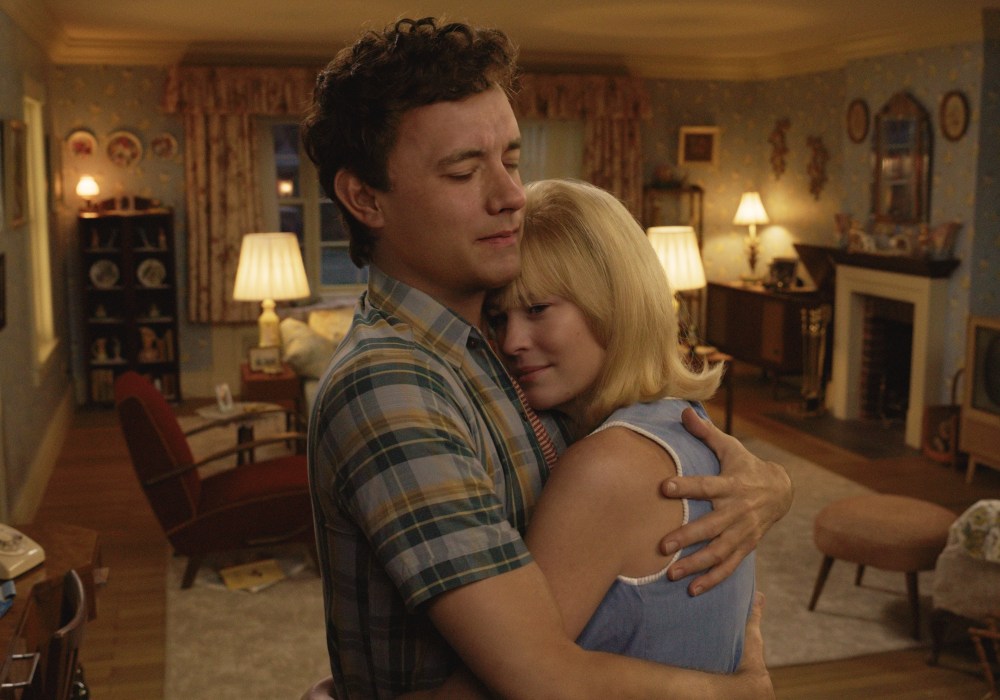
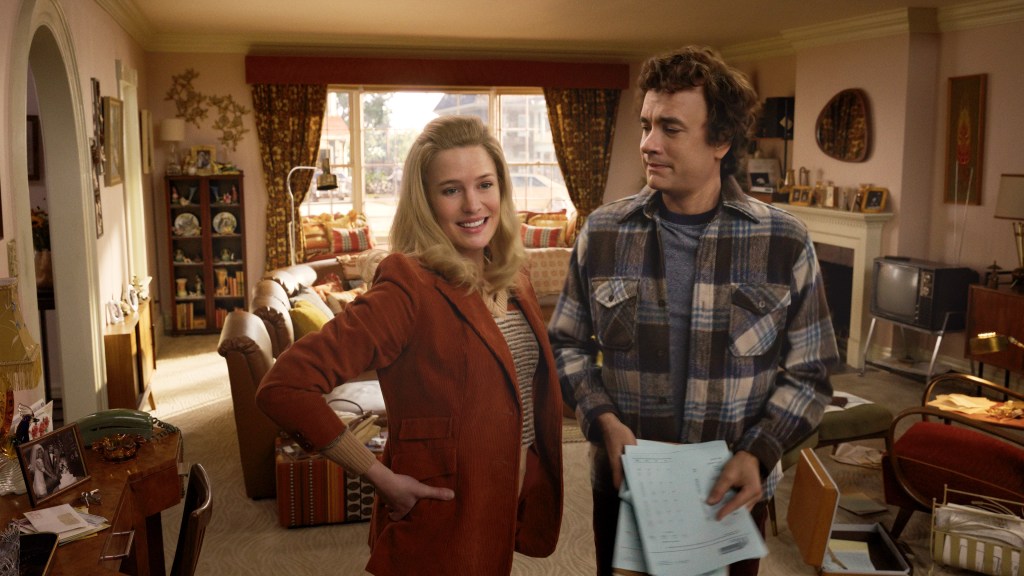
Here (2024): The People Who Brought You Forrest Gump Reunite for a One of a Kind, Beautiful Mess

“Here” is directed by Robert Zemeckis (Back to the Future, Forrest Gump) and stars Tom Hanks (Toy Story, A Beautiful Day in the Neighborhood), Robin Wright (Forrest Gump, The Princess Bride), Paul Bettany (WandaVision, A Knight’s Tale), and Kelly Reilly (Sherlock Holmes, Above Suspicion). This film chronicles various events over millions of years from the same location, capturing the moments and lives of those who live there.

First off, for those not aware or for those who happen to live outside the United States, this review is being posted just before Thanksgiving. Because you cannot have Thanksgiving… without “T Hanks.” In all seriousness though, Tom Hanks and Robert Zemeckis make for one of the most notable actor-director duos in Hollywood. The two have worked together to create films including “Cast Away,” “The Polar Express,” and in the past couple years, Disney+’s “Pinocchio.” Both people are reuniting for their latest collaboration, “Here.” Also appearing in the film, Robin Wright, therefore allowing for a “Forrest Gump” reunion. The fact that this film had talented, experienced people is only part of why I was looking forward to it. Having first seen the trailer to “Here” at my local multiplex a few months ago, I have been excited for it ever since. I was under the impression that this could end up being a unique film with a lot of potential.

From a camerawork and cinematography perspective, “Here” is by no means as immersively complex as “Birdman,” a movie that is set in multiple locations and uses blink you’ll miss it techniques to trick your mind into thinking it is done as one singular shot. But the selling point that kept me most interested in “Here” was getting to see the camera sit in a spot where it does not move. Having seen the film, I think the film gets creative with that concept, spanning different points in time. Everything from prehistory to the birth of the United States to modern times where we see the interior of a suburban house. The movie always maintains a quick pace from scene to scene, and even in moments that feel less relevant to the big picture, I was still hypnotized by everything that was going on.

That said, much like another Robert Zemeckis film featuring Tom Hanks, “The Polar Express,” this film could use some work when it comes to the characters. I have gone several holidays watching “The Polar Express” and even though the point a to b progression is clear for its protagonist, the Hero Boy, I cannot say I resonated with that film’s characters maybe to a degree I would have preferred. I always found the “experience” of watching “Polar Express” to be immersive, often inviting. But I wish I got to know the people in the film on a deeper level. Most of them are one-note or stereotypical. Similar to the ride to the North Pole in “The Polar Express,” I like the journey “Here” takes me on. This movie also has one notable improvement over “The Polar Express.” It does a better job fleshing out its main characters, a task that marvels me considering how many points in time and the list of people this film deals with. But even with that in mind, the characters themselves are still not the greatest when it comes to Zemeckis’s filmography. I am not going to remember anyone’s name from this film within the next couple months. If I watch this film a second time, which for the record, I would, I am probably going to be just as immersed as I was in the first. But whereas “The Polar Express” takes you on a fantastical voyage, “Here” is essentially like watching security camera footage but with twice the production value.

The one consistent story through a security camera is not always a person being captured, but rather the room or space someone just so happens to be in. Similarly, the story for “Here” is not consistent. It is bits and pieces. Perhaps it is an allegory on life itself. As we age, we remember certain times of our lives more than others, and maybe this movie is a reflection of our deepest memories. There are moments that speak to us, there are little things in the background, and even some times of our lives we would rather forget. It also shows how places can become a foundation of who we are. If you have a home for a long time, like the place or not, it becomes a part of you.

While I found the pace of the film to be a positive, I also found its fidgety structure to be a negative. The film is presented in a non-linear order, and in some ways, it works. Part of me wonders if Zemeckis wanted to do this film linearly at one point and was not loving it. I honestly do not know if the film would be any better had it been linear, in fact, one could argue it would be worse, I wonder if most audiences would like it. But still, the film is a bit clunky, though somewhat surprisingly, it also happens to be clear.

Once again, this is the latest project between Tom Hanks and Robert Zemeckis. But of course, another one of Zemeckis’s collaborators is here too, composer Alan Silvestri. Far and away, my favorite scores I have heard this year are definitely “Dune Part Two” and “IF.” And while Silvestri does not bring forth a score as memorable as those, he holds his own. Similar to “Inside Out 2,” this film opens with music that comes off as welcoming as can be. It is grand, it is prominent, it almost takes me into the screen. I could see myself listening to parts of the score in my free time.

For those who do not know their film history, “Forrest Gump” won Best Picture at the Academy Awards the year it came out. Having seen “Here,” it is hard to say that this film is going to be nominated for even one Oscar this year. Yes, Tom Hanks is given a lot to do. But I cannot name a moment of this film where he particularly stands out, and the same can be said for most of the ensemble. Though if I recall any actor in this film being a surprising standout, it would be Paul Bettany. “Here” is definitely not the worst film in Zemeckis’s library, but it is far from his best. It is no “Back to the Future,” though I will definitely remember this film more than “Allied” or that adaptation he did of Roald Dahl’s “The Witches” that ended up going to HBO Max. But I cannot lie, even though I would not say the film is perfect, it is a unique, fun, fascinating journey and I think it is remarkable how much material and substance some scenes are able to present about a specific time, specific people, and their lives with just so little material to work with.

In the end, “HERE” are my thoughts on the movie… I had a really good time with it! Is it messy? Sure, but much like the characters sometimes come to realize about the house we see for most of the film, it is sometimes a beautiful mess. I also dug the ending. The movie caps off on an emotional note. Kind of like Robert Zemeckis’s 2018 film “Welcome to Marwen,” I wonder if I am going to be alone when it comes to my positive opinion regarding this film. I loved “Welcome to Marwen” when I saw it. In fact, I loved it so much that I was shocked to find out how many other people did not like it. Having seen “Here” however, I can get why this movie would not work for certain people. At times it feels more like an experiment than a concrete story. But it does not mean the experiment is boring. I was invested from start to finish. I am going to give “Here” a 7/10.

“Here” is now playing in theaters and is available to rent or buy on VOD.

Thanks for reading this review! If you want to see more reviews coming soon, stay tuned for my thoughts on “Gladiator II,” “Red One,” “A Real Pain,” “Y2K, “Juror #2,” and “Wicked.” If you want to see these reviews and more from Scene Before, follow the blog either with an email or WordPress account! Also, check out the official Facebook page! I want to know, did you see “Here?” What did you think about it? Or, what is your favorite collaboration between Tom Hanks and Robert Zemeckis? Let me know down below! Scene Before is your click to the flicks!

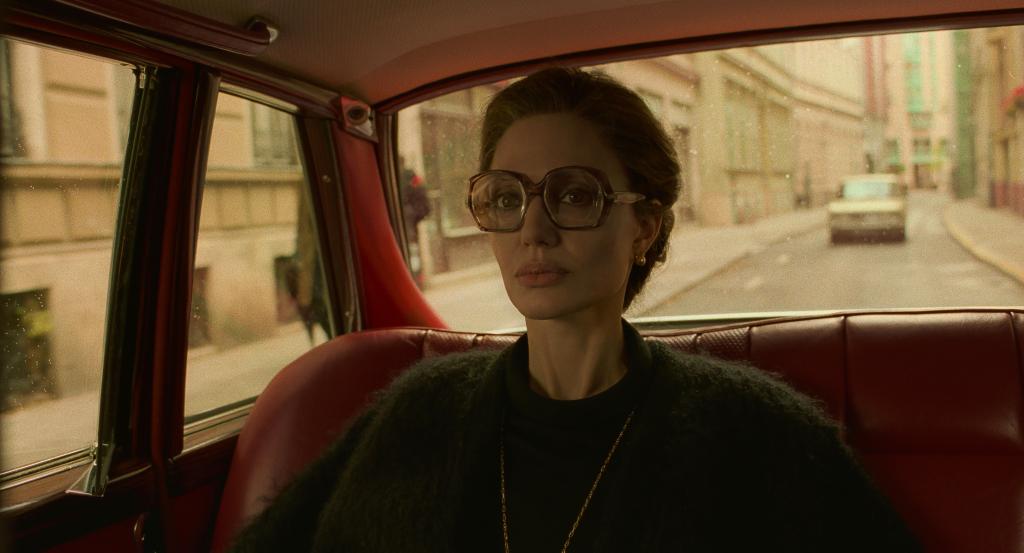
Anora (2024): A Truly Rad Concept That Fully Embraces Its Chaotic Nature

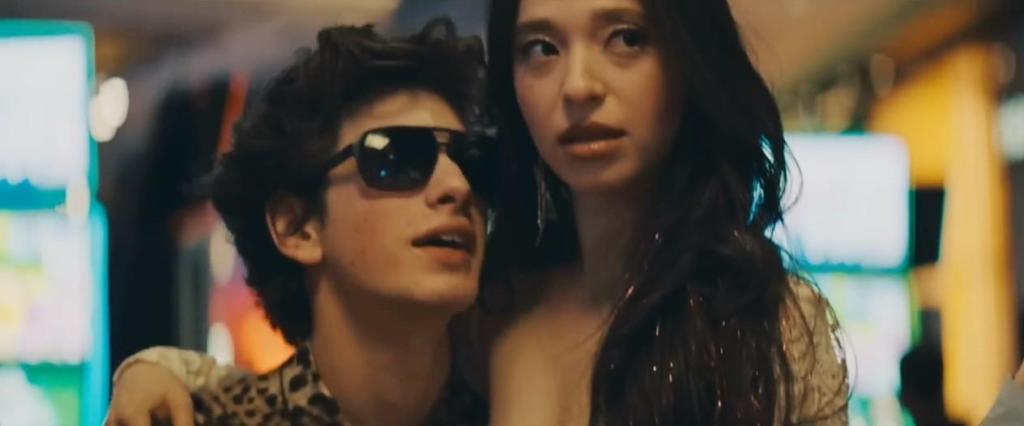
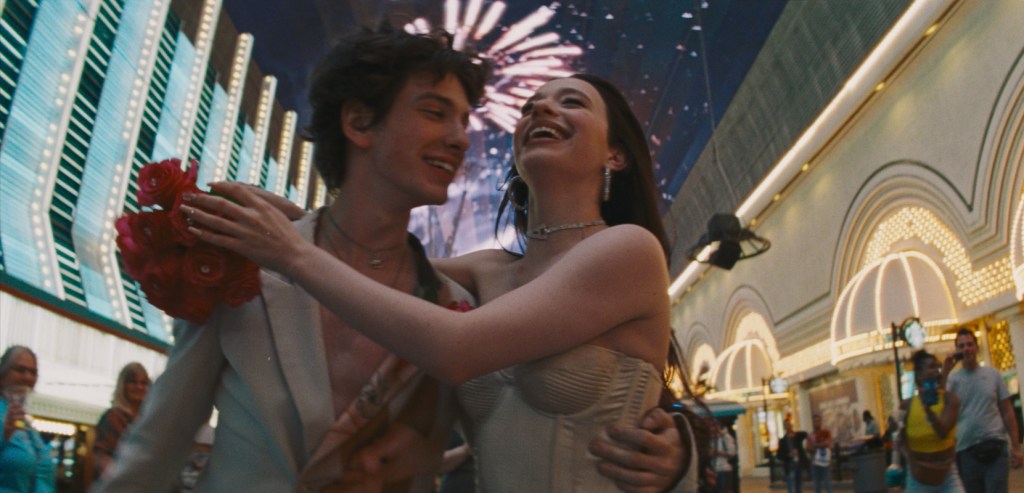
“Anora” is written and directed by Sean Baker (Red Rocket, The Florida Project) and stars Mikey Madison (Better Things, Once Upon a Time in Hollywood), Mark Eydelshteyn (The Land of Sasha, Pravednik), Yura Borisov (AK-47, Guest from the Future), Karren Karagulian (Red Rocket, The Florida Project), Vache Tovmasyan (Lost & Found in Armenia, Golden School), and Aleksei Serebryakov (Nobody, McMafia). This film follows the relationship between an exotic dancer and the son of an oligarch. Once the son’s parents find out the two have married, they do what they can to declare it invalid.

We are reaching the end of the year, which as far I am concerned, means it is crunch time. There are so many movies coming out that I would like to see, or in cases like “Wicked,” kind of have to see to stay in the conversation. I have so many movies on my radar to the point where I do not know if I have the ability to watch all of them. I have several reviews on the to-do list, including this one. Of the films that are on the lineup, “Anora” is an utmost priority. The biggest reason is because the film won the Palme d’Or at the Cannes Film Festival. Of the last five films that won the Palme d’Or, three were Best Picture nominees at the Oscars, and Bong Joon Ho’s “Parasite” ended up winning the Academy’s coveted title for the year it was nominated. Additionally, I also glimpsed at one of the trailers for the movie and it was one of my favorite trailers I have seen this year. It promised a compelling story with an individualistic flair about two characters who I ultimately looked forward to seeing on screen.

But I was not prepared for what kind of movie this was going to be. I had a suspicion that “Anora” was going to be good. I also had a suspicion that “Anora” was going to be unique. I had a suspicion that “Anora” was going to be an experiential event. But even as the movie unfolded, I was marveled by whatever the heck it was I was seeing. This movie has a pace to it that really should not work, but for whatever reason it does. There is a key scene in the second act that drags itself out so heavily and takes its time, but never once does a single moment of it feel wasted. Why? Because it contains characters that I care about, and even if some of them are not exactly role models, I am nevertheless in a trance as I find out what their next move is going to be.

The stars of this movie are Mikey Madison and Mark Eydelshteyn and whereas you might look at a lot of other movies and find couples to be matches made in Heaven, I’d argue these two are a match made in Hell. I do not mean that as a negative. If anything, these two have some of the best chemistry in an on-screen couple I have come across in recent memory. But as people, these two are not perfect, arguably on purpose. You have Ani (Madison), who works as a stripper in a club, and Vanya (Eydelshteyn), who stays at home playing video games all day. Granted, he and his family can afford it, so it could be worse. But he is a bit of a spoiled brat. But both actors play these imperfect people to a tee and watching them together is exciting. Every moment they are on screen together, I bought into their connection. Sometimes certain absurdities come up between them, but the movie maintains an atmosphere that makes you buy into said absurdities. Individually, I honestly think Mikey Madison is going to be up for several high caliber awards this season. There are still plenty of movies on the way, but if the Academy Awards were tomorrow, Madison might be my pick to win Best Actress.

Screenplay-wise, this film is one of the finest of the year. It contains great dialogue, even from the most minor of characters. I bought into every single character as they were presented on screen. This is a screenplay that at times is about the little things. You have the main dialogue, of course. But when that is not being brought to life, we see little quirks or trademarks come up for certain characters and I fell in love with some of them as they occurred. The script for this film has the style of a Coen Brothers movie like “The Big Lebowski” if it were directed by Quentin Tarantino. Honestly, there is a scene that in terms of pace and line delivery, I would have assumed was straight out of “Pulp Fiction.”

“Anora” is a near perfect film, but if I had to name any problems with it, that would be easy. This movie’s first two acts fire on all cylinders. I was engaged the entire time, and I was immersed into the story and its characters. But the third act, while still good, loses some steam for me. It is kind of like “Speed.” The film is fantastic and some of Keanu Reeves and Sandra Bullock’s best work, but the movie peaks at a certain point in act two. The rest of the movie is good, but not as hypnotic as it previously was. But never once did I feel bored or disengaged to the point where I wanted to leave.

I beg of you, watch “Anora” in a theater. Specifically, if you can, watch it in a crowded auditorium. If you are in New York or Los Angeles, part of me assumes this could be an easy task to accomplish depending on the time, but if you live somewhere else, take as many friends as you can. Ask friends of friends if they want to come. I am of the belief that every movie is better in the theater, and “Anora” is a testament to that. This is one of my favorite theatrical experiences I have had this year, partially because “Anora” just so happens to be one of the funniest movies I have watched this year. I am so happy to have been able to check it out in a nearly sold out screening. I was in an aisle seat and I was doing my best not to fall into said aisle sometimes.

In the end, “Anora” is fantastic! I know this is a rather vague review. But I am leaving it vague on purpose. Because other than seeing one trailer, I went into “Anora” blind. And I think that is the best way to experience this film. Because yes, I drew comparisons to films like “The Big Lebowski” and “Pulp Fiction,” but this is a unique movie with some of the most engaging storytelling I have come across in a long time. It is a great story that highlights class in addition to people doing what they can to get by. The movie almost drags towards the end. The third act is easily the weakest in my opinion. Maybe that’ll change with a rewatch. Who knows? But if you are looking for something original this awards season, “Anora” is worth checking out. It is also responsible for one of my favorite scenes of the year that in a lot of other movies would probably be half as long. But for whatever reason, it goes on for such a long time and I have no complaints about it. I am going to give “Anora” a 9/10.

“Anora” is now playing in theaters everywhere. Tickets are available now.

Thanks for reading this review! My final Election Days review is coming up, and it is for “Elvis & Nixon.” The film is a lot of fun and I cannot wait to talk about it. As for new releases, stay tuned for my reviews for “Here,” “Gladiator II,” “Red One,” “A Real Pain,” “Y2K,” “Juror #2,” and “Wicked.” If you want to see these reviews and more from Scene Before, follow the blog either with an email or WordPress account! Also, check out the official Facebook page! I want to know, did you see “Anora?” What did you think about it? Or, what is a film that you really enjoyed but would also claim to be at its worst in the third act? Let me know down below! Scene Before is your click to the flicks!

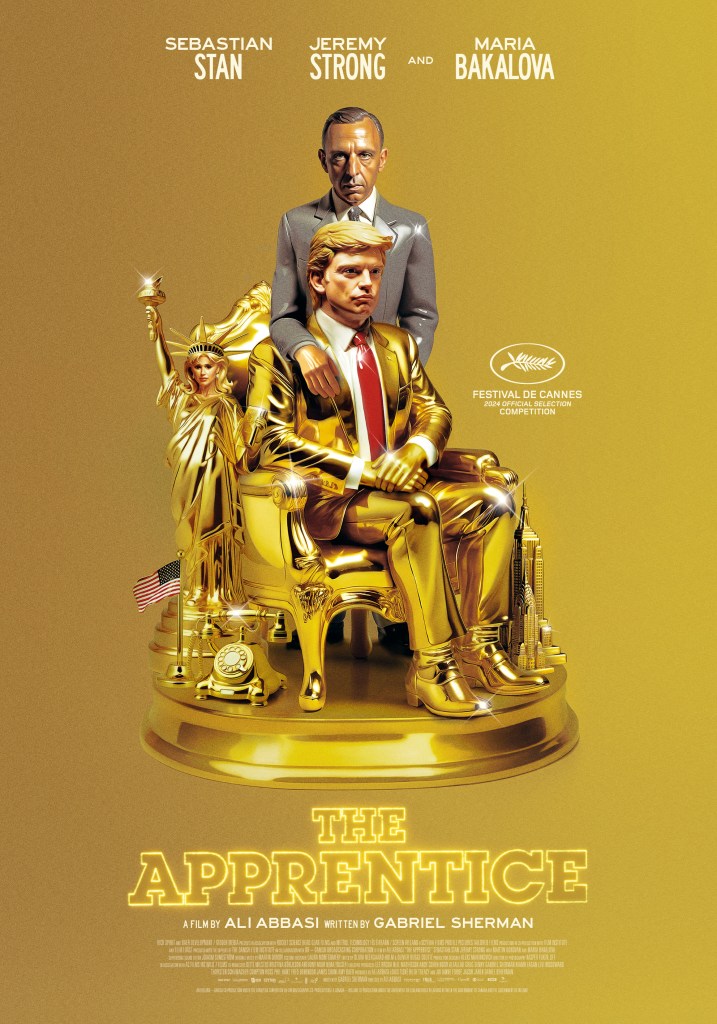
The Apprentice (2024): Sebastian Stan Shines as Controversial Businessman Donald Trump

“The Apprentice” is directed by Ali Abbasi (Holy Spider, The Last of Us) and stars Sebastian Stan (Captain America: The First Avenger, The 355), Jeremy Strong (The Big Short, The Gentlemen), Maria Bakalova (Borat Subsequent Moviefilm, Guardians of the Galaxy Vol. 3), and Martin Donovan (Insomnia, Tenet). This film follows a young Donald Trump in the 1970s and 80s and examines his career as a businessman.

I will be honest, I was extremely hesitant to watch and review this film. Part of it is because I do not typically want to dive into politics on Scene Before. Well, maybe except for this month with my Election Days reviews. By the way, go check out my thoughts on “The Campaign,” “W.“, and “On the Basis of Sex” if you want to see me talk about some slightly older films. I mean, they are not that old, they are from the 21st century. That said, I will remind everyone that it is November 2024, therefore it is the culmination of an election year in the United States. Marketing-wise, it would make sense to release a film of this nature around the latter half of the year. But as a viewer, I was also weary of checking it out because regardless of my political views, election season is already anxiety-inducing on its own. But of course, I thought this would be a good film to talk about given the time of year, really the time in society in general. For the record, I am going to do as best as I can to stray away from my personal views on Donald Trump as a politician.

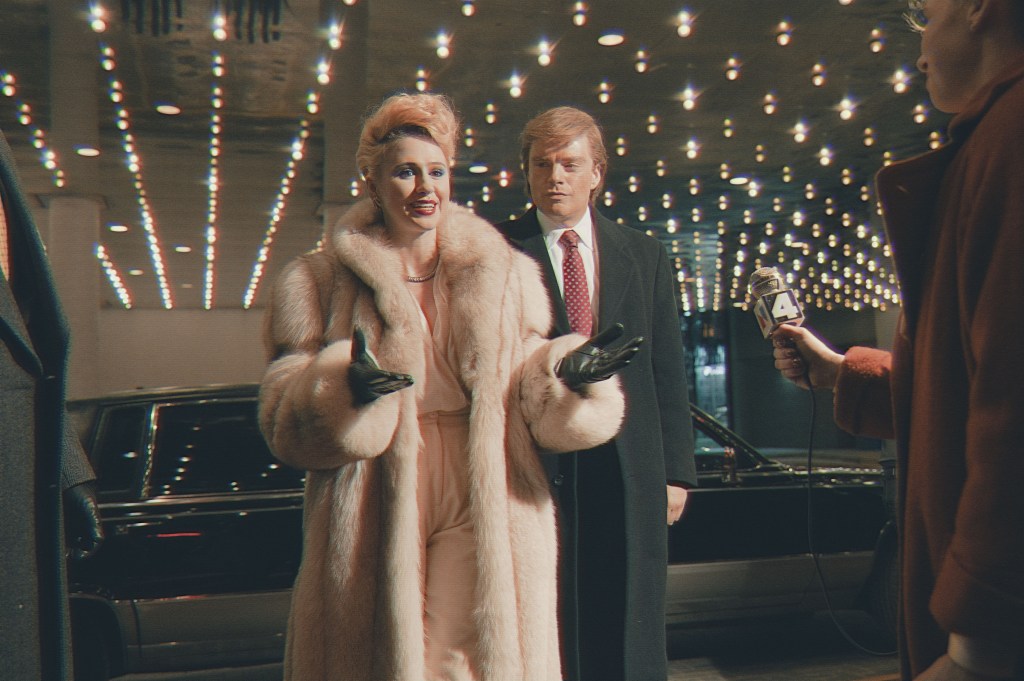
That said, one thing I will note for people maybe looking to watch this movie, it is not about Trump’s political career. It instead contains itself to a time where he was more well known as a mogul, a New York personality. Also despite the title, this is not set in the 2000s or 2010s. I say this because, well, Trump hosted “The Apprentice” at the time. As slightly misleading as that title could come off, there is a reason why the movie has its namesake. For one thing, the film is about a younger Trump, and heavily explores the building blocks of his business, his love life, his family life. It sprinkles a lot into a two hour runtime but it is not a piece about Trump’s entire life. Since I was born in the late 1990s, I inevitably know Trump more as a politician as opposed to anything else. Having followed Trump through that realm in recent years, he has certain trademarks, words, and mannerisms that have become a part of his personality. Sometimes they are even used against him in a jokey manner. Sebastian Stan to my lack of surprise dives into some of these trademarks, and while the film is definitely somewhat grounded with its intimate camerawork, it also has a feel to it that is comparable to more comedic material in media.

To be real, Sebastian Stan is probably not going to win the Academy Award for his portrayal of Donald Trump, as much as some may be convinced “liberal Hollywood” will let him win out of spite of others. But I like his performance in “The Apprentice.” Like I said, some of Trump’s trademarks come up in the film, and I think Stan masters them without coming off as a cartoon. One thing I have noticed over the years about most of the Trump performances I have seen is that a lot of them come off as hyperbolic. But those performances traditionally tend to fall within a certain context. Maybe they’re on a variety show like “America’s Got Talent” or “Saturday Night Live.” They tend to work for what they are. But I was surprised to see Stan deliver on a much calmer interpretation of the well-known businessman. Regardless of how I feel about Trump as a person, seeing something like this is refreshing. Now having seen the performance in this movie, kind of like say Alec Baldwin’s portrayal in “Saturday Night Live,” I am sure that there is an audience that will look at this performance, perhaps even the screenplay behind it, and immediately find themselves turned off by it. To call this a pro-Trump film would be like calling “Deal or No Deal” a pro-banker game show. Am I surprised by this film’s leanings? Not really. But the fact is I found the film as a whole to be entertaining. It is well-paced, it is engaging, and I latched onto the characters.

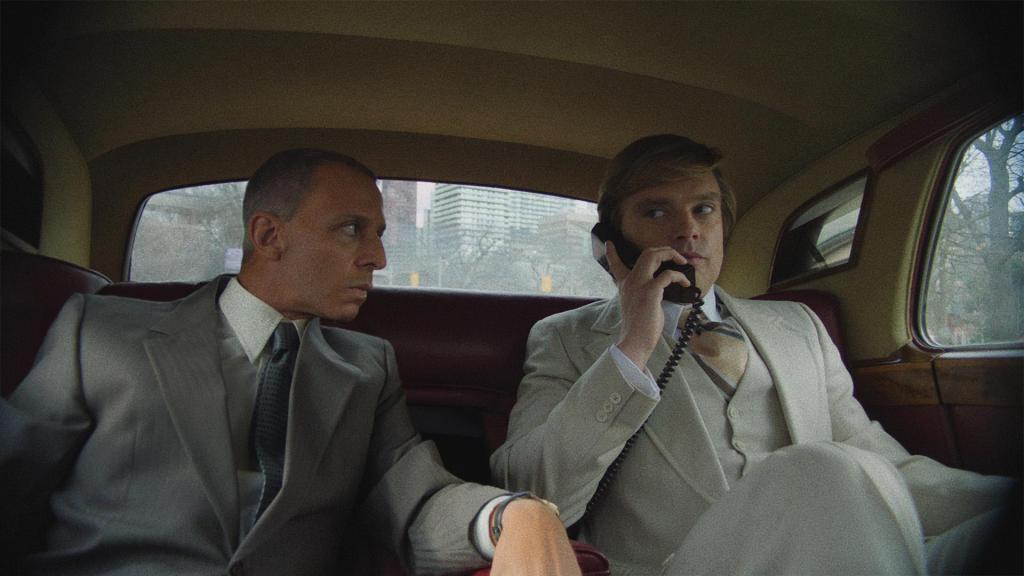
What this film surprisingly reminds me of is the “Star Wars” movies. This could apply to a number of them, but perhaps the first that comes to mind is “Revenge of the Sith.” As I continued to watch the relationship between Trump and attorney Roy M. Cohn, their dynamic in this film showed similarities to that of Anakin Skywalker and Palpatine. In this case, Trump would be the Anakin and Cohn would be the Palpatine. After all, Cohn is a little older, a little wiser, and very much getting into Trump’s head throughout the film. The movie presents Cohn as a mentor figure to Trump, instilling him with all sorts of knowledge. Cohn even presents three rules to Trump: “always attack, never admit wrongdoing, and always claim victory.” This is a motto that the public has seen Trump live up to in recent years especially regarding his political career.

I also love the overall aesthetic of this film. It is practically a symbol of Trump as he builds himself. If this were set years down the road, maybe this movie would be presented as something that looks more professional, considering how he would have continued to establish and maintain his name. But this matches a story about a guy who is trying to live up to his family name while also assembling the building blocks behind a legacy of his own. Only he has not yet been able to make that happen. Trump may be one of the most prominent men in the world today, but like with anyone else, getting to that position takes time.

The film is sometimes shot and presented in such a claustrophobic manner. It puts in you the movie with its multitude of closeups, darker colors, grim lighting, and sometimes vlog-like style. The more I look at this movie, it reminds me of those home videos shot on older camcorders in say the 1990s or early 2000s if you gave the captured video a pinch of polish and a bigger budget.

In the end, “The Apprentice” fires on all cylinders. It is engaging, it is raw, surprisingly funny at times, and lets out the best from its solid cast. Sebastian Stan, to my surprise, was a decent pick for the lead role. “The Apprentice” is most definitely not for everyone. In fact, I not only say that thinking a certain group of people who like Trump will immediately be turned off by the film, but there is also some visual content that may be uncomfortable for some viewers regardless of your political leanings or thoughts on Trump himself. In hindsight, I can see why this movie did not make a ton of money. People often go to the movies to escape, and I do not know if “The Apprentice” would be one of those films that would allow people to do such a thing, especially at this time. But I also could see why certain people would find the film to be relevant. I cannot recommend this movie to everyone, and knowing the current landscape, it is hard to know how many minds in any direction will be changed once the film’s over. That said, I give the film a thumbs up. It has a compelling narrative, good direction, and fine acting. I am going to give “The Apprentice” a 7/10.

“The Apprentice” is now playing in select theaters and is available to rent or buy on VOD.

Thanks for reading this review, my next review on the lineup is going to be for a film that is getting a lot of conversation right now, and that is “Anora.” I cannot wait to talk about this flick. Look forward to that review coming soon. Also on the lineup, I have reviews on the way for “Here,” “Gladiator II,” “Red One,” “A Real Pain,” and “Y2K.” Also, my final Election Days review is hitting the blog next week, and it is for the movie “Elvis & Nixon.” I just watched the film earlier this week and I cannot wait to talk about it. If you want to see these reviews and more from Scene Before, follow the blog either with an email or WordPress account! Also, check out the official Facebook page! I want to know, did you see “The Apprentice?” What did you think about it? Or, in the spirit of Donald Trump… Tell me your honest thoughts on “Home Alone 2: Lost in New York.” Personally, while it has its moments, it is a bit lazy in its structure, very much copying the recent success of its predecessor. Also, how you do get lost in New York? If you know numbers, you’re good as gold! Either way, if you have thoughts on “Home Alone 2: Lost in New York,” let me know those thoughts down below. Scene Before is your click to the flicks!

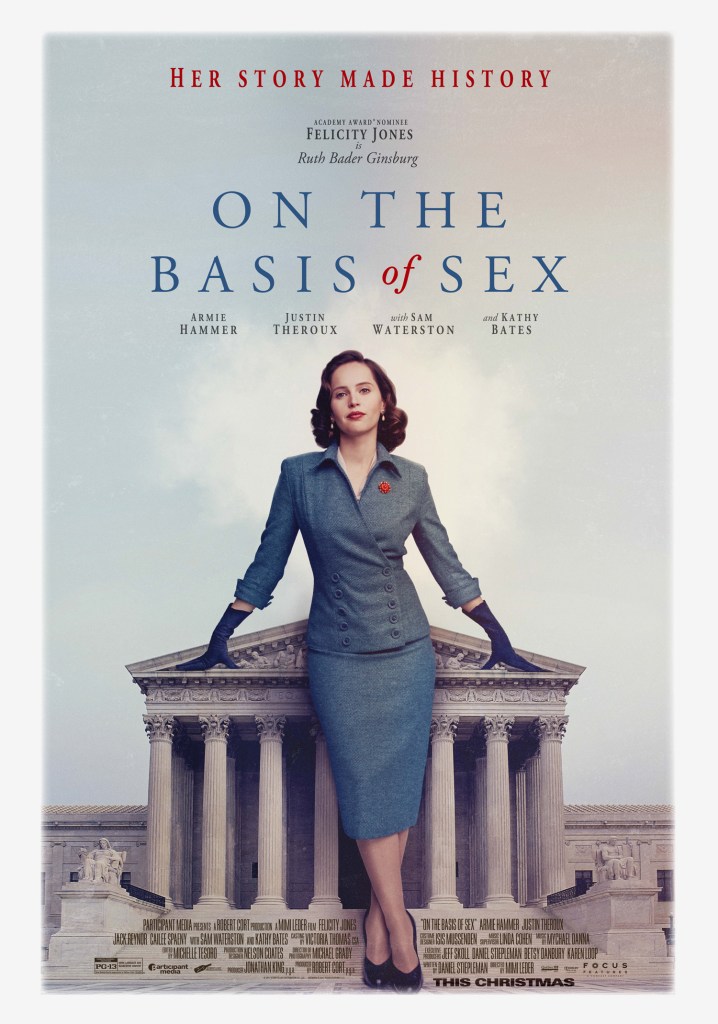
On the Basis of Sex (2018): Felicity Jones Shines as RBG in This Surprisingly Decent Biopic

Hey everyone, Jack Drees here! It is time to continue Scene Before’s Election Days review series. Unusually, this review is being posted on a Monday! I intended this series to be updated weekly on Tuesdays, but to be frank, I have a commitment tomorrow. I am not sure if my schedule would allow me to finalize this post then, so I thought I would get it out today. Speaking of unusual, unlike the last two movies I reviewed, “The Campaign” and “W.“, this review regards a movie about someone whose seat is determined by elected officials, not necessarily by the people of the United States on Election Day. Today we are going to focus on the prominent Supreme Court Justice, Ruth Bader Ginsburg. Having joined the Court of Appeals in 1980 during the Jimmy Carter administration, not to mention appointed to the Supreme Court in 1993 during Bill Clinton’s time as the U.S. President, she has maintained a reputation as a trailblazer. This film focuses on a time in her life before all that happened. Is the movie worth watching? I will share my thoughts below and you can find out for yourself.

“On the Basis of Sex” is directed by Mimi Leder (Deep Impact, Pay it Forward) and stars Felicity Jones (Rogue One: A Star Wars Story, The Amazing Spider-Man 2), Armie Hammer (Cars 3, Nocturnal Animals), Justin Theroux (Mulholland Drive, The Girl on the Train), Sam Waterston (Law & Order, The Newsroom), and Kathy Bates (The Waterboy, Misery). This film is about Ruth Bader Ginsburg, who must overcome various obstacles to help herself, her family, all the while trying to establish a career in a competitive, everchanging climate.

Despite coming out more than half a decade ago, I missed “On the Basis of Sex” when it came to theaters. After all, there were so many films coming out at the time that I could only get to a certain number of them. I was mainly focused on what insiders were projecting to be the major awards contenders at the time and “On the Basis of Sex” did not seem to be one of them. I was intrigued by the premise, but I had a bit on my plate. My motivations even caused me to miss “Bumblebee,” a blockbuster I was curious about at the time. By the way, I do not have a review for it, but it is a good movie! I eventually ended up buying a used copy of “On The Basis of Sex” on Blu-ray for $3.99, so I thought it would be worth checking out some time. And worth checking out, it is.

I knew “On the Basis of Sex” would be good, but I did not expect it to stand out the way it does sometimes. I want to quickly address the pacing of this movie. I am not surprised when I watch say an action movie or a comedy movie and find myself immersed in those environments to the point where time moves at supersonic speed while watching those. There was a point where I checked how far the movie was into its runtime and to my surprise, we were almost halfway through and I thought to myself, “Wow! I guess I’m really enjoying this!” It reminds me of when I watched “The Post.” It is shocking and delightful to know how immersed you can get in a story from time to time that is almost non stop talking.

“On the Basis of Sex” starts off on a high note. Perhaps literally. Partially because the song choice in the beginning perfectly sets the tone for the movie. It is loud and grabs your attention, kind of like the fight for equal rights this film often tends to highlight. But not only does the movie start well from an audio perspective, but the opening sequence set at Harvard is finely edited and shot. The movie starts off with this gigantic sea of men, therefore illustrating how there is a lack of women in Ginsburg’s position. The men are also all wearing suits and jackets. Each jacket looks almost like the other. They’re grey, they’re black. It is a limited and somewhat uninviting color palette. Then you look at Ginsburg in her light blue outfit. I am sure if she were wearing similar colors to the men surrounding her we could identify Ginsburg just fine. But her outfit, most notably due to its vibrant color choice, easily grabs your attention. I thought the costuming is top notch here, as it is for the remainder of the film.

Felicity Jones plays Ruth Bader Ginsburg in this film. Jones does a decent job portraying a rather commanding figure. When I think of RBG, I think of someone who is motivated, someone who takes charge. This is not her most notable lead role in the last decade, but I must say between this and the much more popular “Rogue One: A Star Wars Story,” Jones does a decent job playing strong women while also gracefully showing the weaknesses of said characters. When I watched “Rogue One,” I thought Jones did a good job at highlighting Jyn Erso’s uncertainty on screen. I remember when she was leading people into battle and I could feel her timidness, even though she was not showing it. In the case of RBG, I could tell Jones was showing more confidence this time around. After all, the movie shows she is still learning new things, but she is mature and certain as to what she wants. As to how to get it, that is occasionally the obstacle. At times, the obstacle exists just because of how other people see her.

The film dives into the sexism that women deal with, even today. We see a man telling RBG to smile more, change her tone. There is a moment where we see Ginsburg and her daughter walking through the street and some construction workers are catcalling them. We see Ginsburg, reservedly tell her daughter Jane, played by Cailee Spaeney, to just keep walking. But the daughter is not having it, she yells at them, signaling their actions are not okay, and then hitches a cab. This leaves her mother surprised and impressed, showing the progression of how women are opening up as to how they prefer to be treated. It is a memorable scene and does a good job at highlighting how far women’s rights have come generation after generation, even if it is shown through something as small as this.

The film also shows Ginsburg, despite being a star student in law school, struggling to find work. And while the job market can prove to be competitive in a number of contexts, for Ginsburg, she struggled to find work because of her identity. Multiple law firms turned her down because they did not want to hire a woman. We find out Ginsburg ends up taking a position as a professor at Rutgers Law School, which initially tends to bewilder her husband, Martin Ginsburg. Through the tone of the dialogue and various visual cues as Ruth reveals such news to her husband, it is emphasized that maybe this is not the outcome both sides were expecting. Even so, the two recognize the small victory. It is a decent scene showing the bumpy road that it is life. Once several doors close, another one may open that you were least expecting.

Despite how much I enjoyed “On the Basis of Sex,” it is not without its flaws. “Hollywoodized” is a term I have used on Scene Before in the past, and it fits here too. At times, this movie’s dramatization is rather obvious and almost distracting. While the movie is based on true events, there are certain moments during the showcasing of said events that feel like they would only exist in the context of a dramatized film.

Although if there is one thing that pipes itself up throughout the movie that really kept me interested, it is Mychael Danna’s score. Having watched lots of films over the years, I have had my fair share of scores I liked, but there are a certain amount that I would revisit on my own time. “On the Basis of Sex,” to my surprise, seems as if it could end up being one of those scores. Maybe I will eventually play it while writing my reviews.

As far as biopics go, I am not going to pretend “On the Basis of Sex” reinvents the wheel. There are moments where we see Ginsburg’s life play out that were beyond fascinating to learn about but the structure of the film does have a been there done that feel at times. If you can handle some predictability, cliches, and overdramatization every once in a while, you might like this movie.

In the end, “On the Basis of Sex” surprised me. I mean, I was not surprised the movie played out the way it did in parts. There is definitely a noticeable formula that I thought was met. But Felicity Jones carries this film as the lead. Although that does not mean there are no other standouts in the cast. Some include Armie Hammer, Kathy Bates, and even Cailee Spaeney as Ginsburg’s daughter, Jane. What did surprise me was how fast time flew as the movie progressed. I cannot say I felt bored or uninterested, so I have to give credit to the movie for keeping me awake. I am going to give “On the Basis of Sex” a 7/10.

“On the Basis of Sex” is now available on DVD, Blu-ray, Digital, and VOD. As of this writing, the film is available on Netflix for all subscribers.

Thanks for reading this review! I have one more review coming up next week in the ongoing Election Days series and it is going to be for the Amazon Studios film, “Elvis & Nixon.” I have not seen this film before. I just watched the trailer. It seems to promise a lot of fun. I figured after a couple of heavier films, and yes, I include “W.” as an example even though it has comedic elements, I thought it would be fun to maybe end with something on the lighter side. Stay tuned for that review. As for newer releases, stay tuned for my thoughts on “The Apprentice,” “Anora,” “Here,” “Gladiator II,” “Red One,” and “A Real Pain.” If you want to see these reviews and more from Scene Before, follow the blog either with an email or WordPress account! Also, check out the official Facebook page! I want to know, did you see “On the Basis of Sex?” What did you think about it? Or, what is a movie you watched that you feel went by much faster than you were expecting it to? Let me know down below! Scene Before is your click to the flicks!

W. (2008): No Review Left Behind

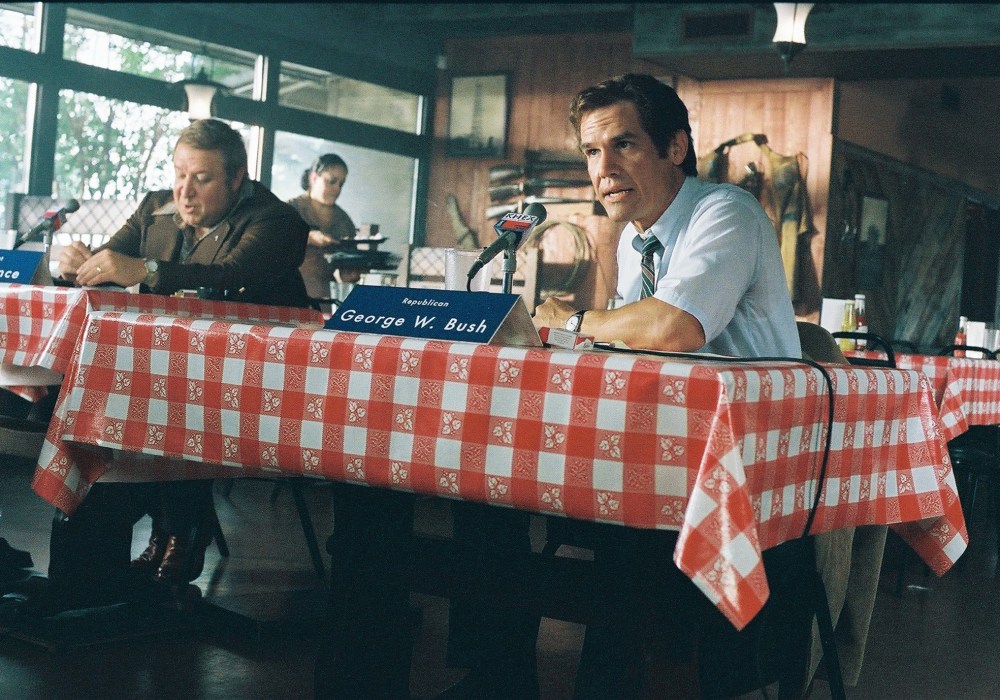
Hey everyone, Jack Drees here! It is time for the second review in my Election Days series! Today we are going to be talking about “W.,” starring Josh Brolin. The film is about the life of the controversial leader George W. Bush. It features a stacked cast and is helmed by a filmmaker whose respectable track record includes other films having to do with U.S. politicians such as “JFK.” Does this 2008 film earn a Texas-sized thumbs up? Or does “W.” take the L? Here are my thoughts…

“W.” is directed by Oliver Stone (World Trade Center, JFK) and stars Josh Brolin (No Country for Old Men, American Gangster), Elizabeth Banks (Slither, Spider-Man), Ellen Burstyn (The Exorcist, The Last Picture Show), James Cromwell (Babe, The Artist), Richard Dreyfuss (Jaws, American Graffiti), Scott Glenn (Urban Cowboy, The Right Stuff), Toby Jones (Harry Potter and the Chamber of Secrets, The Mist), Stacy Keach (American Greed, Titus), Bruce McGill (Collateral, MacGyver), Thandiwe Newton (Mission: Impossible II, ER), and Jeffrey Wright (Angels in America, The Young Indiana Jones Chronicles). This film centers around the life of George W. Bush, the man who would become the 43rd President of the United States.

Like him or not, George W. Bush is an important U.S. President in my lifetime. Not because I agreed with his policies or because I liked him. Perhaps second to George Washington, maybe Abraham Lincoln, W. Bush is the earliest President I remember hearing about at some point in my life. Of course, with me being a child during the entirety of his two-term run, I did not immediately know the various aspects of his time in office that people talk about even today such as how he was President during the 9-11 attacks, No Child Left Behind, his response to Hurricane Katrina, his involvement in the Iraq War, and so on. The movie does not go deep into all of that, but it does not mean it is not a contained story. In fact, I would say I was surprised with how engaged I was with the film itself.

For the record, this is my second Oliver Stone film. I previously watched “Wall Street.” A film that I think does a really good job at capturing the hustle and bustle of the stock market and how much of a sport capitalism can be. So if you want me to compare this film to Stone’s other flicks involving U.S. Presidents, particularly “JFK” and “Nixon,” consider yourself disappointed. All I can say is that “W.” was better than I thought it would be. Though I really should not be surprised. It contains tons of great actors, moves at a brisk pace, and features several engaging characters.

The one thing I will say though about this movie, is that I wonder how people who do not know anything about George W. Bush, his family, or maybe live outside the U.S. would take this film. This movie came out in 2008. W. Bush was still in office at the time, making this is a topical picture during its release. I will let you be the judge as to whether 16 years is a long time, but that is how long it has been since this film has come out. There are people in high school right now who were born around the time Barack Obama first became President. I am not going to pretend I have the strongest opinions on W. Bush’s time in office because as I said before, he was President during my youth. During that time in my life, I was more concerned as to when would the next time I was going to Outback Steakhouse as opposed to the state of the economy. The film dives into the days leading up to Bush’s decision to invade Iraq and I am sure even a number of younger people who may end up watching the movie today would probably have an opinion on it. But such a topic is probably not going to have the same impact on those who vividly remember living through that time in history. At times, this feels like a 2008 film that was specifically made for a 2008 audience. I am not insulting those audiences, just to be clear. Those same audiences also got to witness timeless cinema like “Wall-E” and “Slumdog Millionaire.” But would “W.” hit the same way for today’s generation? Hard to say.

That said, the film is still quite universal in its story. It dives into W. Bush’s relationship with his father, which I thought was one of the best parts of this movie. Even though W. Bush comes from a family with a storied legacy, his relationship with his father is something I think a lot of people can relate to. Because we all have parents, and deep down, most of us want to do anything that will keep us from breaking their hearts. The two have a steady connection, but it is not perfect. Nor is it without rules.

My favorite deep dive in the film has to do with George W. Bush’s relationship with alcohol. We see how much drinking impacts his life in terms of the choices he makes, how it affects his relationships with other people, and his overall stability. The movie tends to present alcohol as an obstacle that keeps W. Bush from potential success. We notice as W. Bush ages and becomes more accomplished, mainly in politics, he gives it up. The movie shows how much drinking holds W. Bush back and how him giving it up seems to correlate with his achievements.

As for the performance of George W. Bush (right) himself, I have to say Josh Brolin did a good job in the role. Never once did I feel Brolin was trying to do an impression of the character. He kind of made the performance his own. He was bold in his presence and consistently commanding from scene to scene. Is it the greatest performance of a U.S. President in film history? No it is not. But to be fair, it is hard to compare with Daniel Day-Lewis as the lead of “Lincoln,” a film that came out four years later. In fact, during the same year “W.” was released, audiences were also treated to “Frost/Nixon,” and I would argue Frank Langella did an even better job as the titular leader in that film.

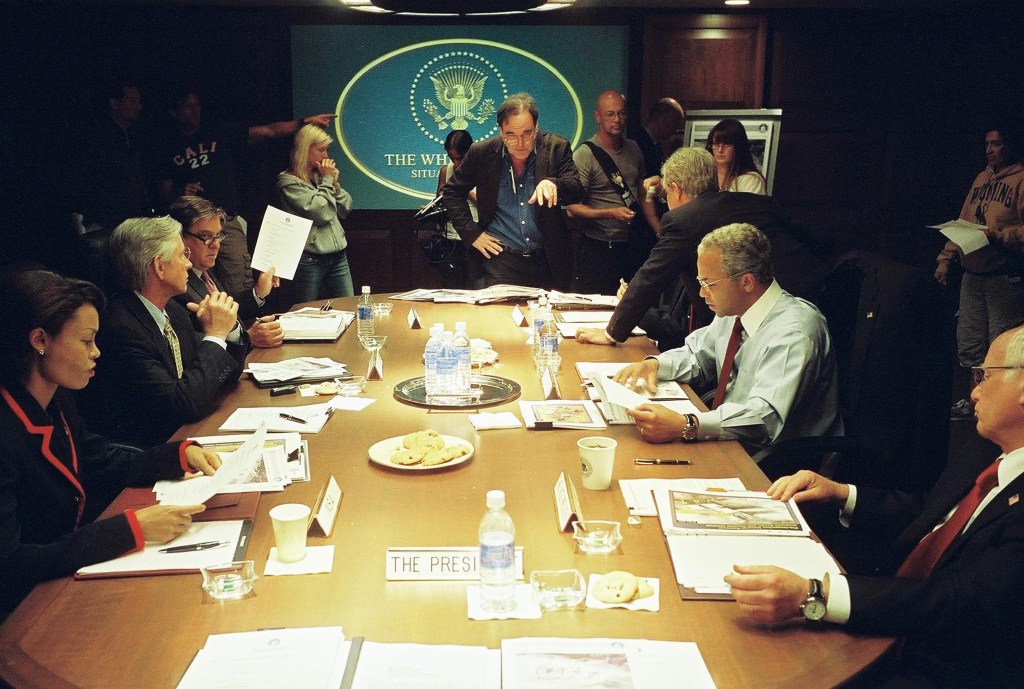
The supporting cast in this film also manages to put their best foot forward. Elizabeth Banks is a standout as Laura Bush. Richard Dreyfuss does a good job as Dick Cheney. And I thought James Cromwell as George H.W. Bush (right) was excellent casting. Across the board, I cannot name a single performance in “W.” I did not like.

But I have to give props not only to Josh Brolin for having the presence one would expect of a flawed but charming leader, but also to the writer of this film, Stanley Weiser, for bringing some decent material to the screen. Unfortunately, it is not all perfect. Despite the film never once feeling boring, it is a tad bewildering at times. The film comes off like I am in history class, and we are doing a unit on the Bush era of politics, whether that is W.’s time or his father’s, maybe with a brief cameo from Jeb here and there. But the unit does not have a clear path. It kind of jumps from place to place and it is not that organized. I guess in a way you can call “W.” a nicely laid out mess. Because I understand the film and what was presented to me. The final product did not melt my brain. I am just not sure if maybe the specific non-linear route the story took was as compelling as it was trying to be.

In the end, “W.” is not a movie I intend to watch again within the next year, but it is one I can definitely see myself revisiting at some point in my life. Again, I am a bit of a novice when it comes to Oliver Stone. “W.” just happens to be a third film in his trilogy revolving around U.S. Presidents. Given how I enjoyed “W.,” it makes me want to go back at check out “JFK” and “Nixon” should the chance ever come up. Is this movie for everyone? Probably not. It is about a controversial leader, so therefore I would not expect it to be for everyone. But it has the hallmarks of a good movie. Decent storytelling, good acting, solid production, and while it is a bit jumbled, I did appreciate Oliver Stone’s vision and what he brought to the table. I am going to give “W.” a 7/10.

“W.” is now available on DVD, Blu-ray, and on VOD. As of this writing, the film is available to stream on Peacock to all subscribers, and can be watched for free on Tubi, Philo, and the Roku Channel.

Thanks for reading this review! My next entry to the Election Days series is going to be for “On the Basis of Sex,” a film about Ruth Bader Ginsberg, the second woman to serve as an Associate Justice of the Supreme Court of the United States. If you want to see this review and more from Scene Before, follow the blog either with an email or WordPress account! Also, check out the official Facebook page! I want to know, did you see “W.?” What did you think about it? Or, do you have a favorite Oliver Stone film? Which of his U.S. President movies would you say is your favorite? Let me know down below! Scene Before is your click to the flicks!

Megalopolis (2024): Mediocritis

“Megalopolis” is directed by Francis Ford Coppola (Dracula, The Godfather) and stars Adam Driver (Star Wars: The Force Awakens, Marriage Story), Giancarlo Esposito (The Mandalorian, Abigail), Nathalie Emmanuel (Furious 7, Game of Thrones), Aubrey Plaza (Parks and Recreation, Dirty Grandpa), Shia LaBeouf (Transformers, Eagle Eye), Jon Voight (Reagan, Midnight Cowboy), Laurence Fishburne (The Matrix, John Wick: Chapter 2), Kathryn Hunter (Poor Things, Andor), and Dustin Hoffman (Lenny, Kramer vs. Kramer). This film is set in the city of New Rome, which is basically an alternate version of New York City. The story is about architect Cesar Catilina as he aspires to rebuild his city into a utopia, much to the opposition of New Rome’s mayor, Franklyn Cicero (Esposito).

Francis Ford Coppola’s resume is one to behold. If you go on the IMDb top 250, you will notice that several of his titles make the list. Heck, as of this writing, “The Godfather” and “The Godfather Part II” literally take up the #2 and #4 spots. “Apocalypse Now” is also at #56. Coppola has no doubt cemented his legacy in Hollywood as one of the icons. Heck, even though it is not talked about as much, I have to say that I really liked “The Outsiders.” It’s a solid movie inspired by a pretty good book. Kind of like Clint Eastwood, it is somewhat mind-blowing to know that Coppola is still making films at his age. “Megalopolis” has become something of a passion project for Coppola. He has been developing it off and on for many years. He’s talked with several actors for an opportunity to appear in the film. He’s even sold part of his winery so he could self-finance the film. But was this movie worth all that time and effort? As much as I champion Francis Ford Coppola for bringing the movie he wants to cinemas, I simply wish I liked it more. “Megalopolis” is not my least favorite movie of the year, but it is certainly one of the most boring.

I will be honest, I almost did not go see this movie, because I heard about the bad reviews this movie was getting some time before checking it out. And I had already dealt with the abomination against humanity that is “Joker: Folie à Deux.” I did not know if I had it in me to sit down and dedicate time to this controversial flick. Unfortunately I hate myself enough to do just that. After two hours that honestly almost felt like two and a half, maybe three, I can say that this film is one of the most unmemorable I have seen all year. That honestly says something. I am sure a lot of people put effort into the films they are crafting. But in the case of “Megalopolis,” I already knew this was a labor of love from the start. Having seen this film come to life, I almost cannot see anyone else doing this film in the style that Coppola did. That said, I cannot say I found the style entirely appealing.

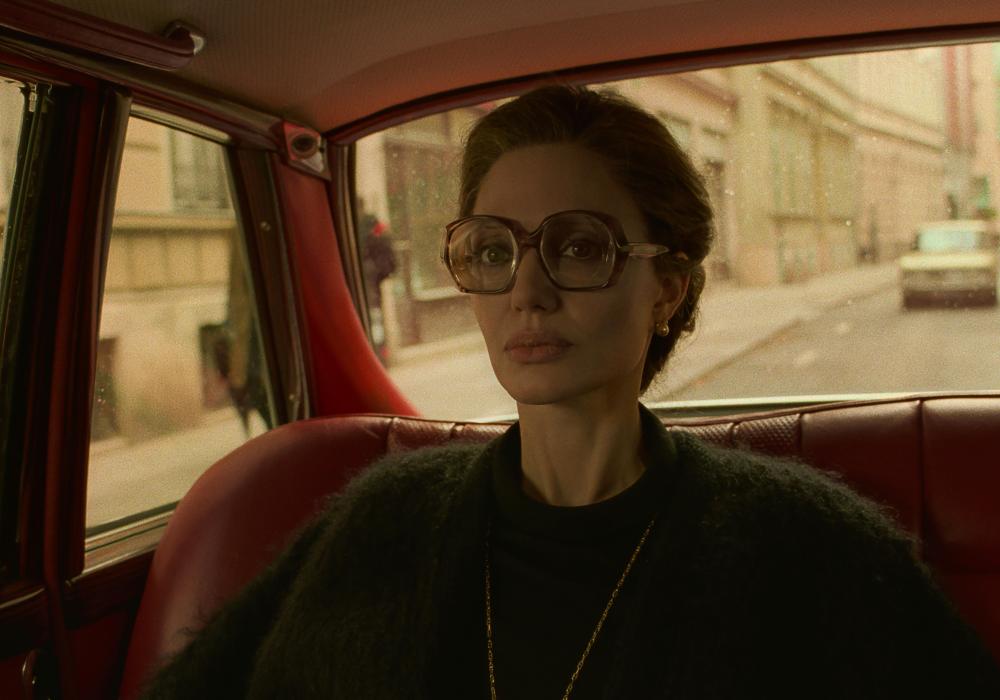
Now, this film is a feast for the naked eye. The lighting in this film offers a variety of color. This one shot of Adam Driver’s face that continues to be ingrained in my memory. From a production value standpoint, this film gets top marks. “Megalopolis” is kind of like, well, here comes another mention of that stinker… “Joker: Folie à Deux.” There is no doubt that the look of the film is worthy of praise. It goes without any debate that it is nicely shot, contains good costumes, and has marvelous set design. There are times where I feel the film gets a little too far-fetched in terms of how fantastical the look comes off. But there are others where I can buy what the film is selling and I like what I see.

The film is set in New Rome, which as I mentioned earlier is basically New York City with some minor changes. The structure is the same, it contains tons of tall buildings, there’s the Statue of Liberty. The Madison Square Garden even exists in this film, and I kind of like what this film has done with the place. In Ancient Rome, people flocked to the Colosseum for events like gladiator fights. And in a sense, MSG is basically a modernized version of the Colosseum. This movie tends to present a stadium with the old school glory of the Colosseum with the modern day wonder of the Madison Square Garden people still flock to today. A good portion of the movie is spent there, and while there are some clips set within the arena which contain select editing choices I honestly found to be mind-numbing, I think the film nails the atmosphere of that venue to make it as Colosseum-like as possible while still factoring in what makes it what it is today. There is very much a blend of old meets new throughout the execution of such an iconic venue.

“Megalopolis” as a film somewhat reminds me of “The Boy and the Heron,” made by another visionary director, Hayao Miyazaki. For the record, I think that film is significantly better than this one. But I say this because I thought the best part of that film is its world-building. That said, the story and characters appear to play second fiddle in comparison. While “Megalopolis” contains a decent cast, most of the characters are missing a spark of some kind. In fact, I would almost argue none of the performances are really that great. There are definitely some that are okay. But some are over the top while others are forgettable. Adam Driver seems to try his best, but it is no “Marriage Story.” If you want a better outing from Aubrey Plaza, go see “My Old Ass.” As great as Laurence Fishburne’s voice is, seeing him in this movie makes me think I would rather be watching “The Matrix” right now. If anything, even though New Rome is a city and not a person, I would almost argue it is a character of its own and is more interesting than any of the people in this film. Then again, that is not saying much.

Although if I had to name one character I surprisingly enjoyed on screen it would be Vesta Sweetwater (top), played by Grace VanderWaal, and if you somehow remember that name from almost a decade ago, then you probably watched season 11 of “America’s Got Talent.” VanderWaal plays a pop star who the film establishes to maintain her purity and remain a virgin until marriage. It is a whole thing. But I thought VanderWaal carried an incredible screen presence whenever she played this character. When she came on screen, she commanded my attention. While her screen time was brief, it made for one of the film’s few highlights, and that says a lot considering I wanted The Clairvoyants to win “AGT” the year she was on by a clear mile. Just one moron’s opinion. That said, VanderWaal is great here. She plays her part well.

In the end, “Megalopolis” is one of those movies that the more I look at it, the more I am transfixed with the images on screen, but not so much the substance within them. When I walked out of “Megalopolis” I started to forget about the film’s context, story, and characters, but there is one thought that stuck in my mind. This could be a decent tech demo. It is colorful, bright, and offers a lot of detail frame by frame. I could clearly tell that Francis Ford Coppola put his heart and soul into this project, but sadly it is kind of a mess. It also comes off as rather pretentious and overly cartoony, which is not the finest combination. Is it the worst film of the year? No. In fact, threepeat alert! It is not as bad as “Joker: Folie à Deux!” So… Yay? I am going to give “Megalopolis” a 4/10.

“Megalopolis” is now playing in select theaters. Tickets are available now.

Thanks for reading this review! If you like this review, I have more coming! Stay tuned for my thoughts on “Venom: The Last Dance,” “The Apprentice,” “Anora,” “Here,” and “Gladiator II.” If you want to see my reviews for these films and more from Scene Before, follow the blog either with an email or WordPress account! Also, check out the official Facebook page! I want to know, did you see “Megalopolis?” What did you think about it? Or, what is your favorite Francis Ford Coppola film? Let me know down below! Scene Before is your click to the flicks!
Look Back (2024): One of 2024’s Most Moving Pictures Yet

“Look Back” is directed by Kiyotaka Oshiyama (Devilman: Crybaby, The Boy and the Heron) and is based on a manga of the same name. This film adaptation is about two girls who could not be more different. Fujino (Yumi Kawai) is a confident student who goes to school every day and Kyomoto (Mizuki Yoshida) is a shut-in, but the two end up sharing a connection through their love for manga and form an unlikely bond.

I am not exactly what one would call famous for my last minute purchases, but I can confirm that I have a history of making them. And this even goes for some of the movies I watch. I had not even heard of “Brian and Charles” until maybe an hour before watching the film when I popped on the first trailer from my home. But I found it to be a solid movie, and therefore a good use of my time even if I did not take much of it to consider watching the film. I remember going to see “Captain America: The Winter Soldier” on opening Thursday because my party and I had tickets to see “Noah” around the same time, but the showtime was canceled. Moments later, one thing led to another and we ended up seeing “Captain America: The Winter Soldier,” which continues to reign as one of my top titles in the MCU. While not as last minute as those two, I was prompted to check out “Look Back” after seeing something something about it online. I booked a showtime the same day on the AMC app, and took my car to the mall to go watch the movie. I did not watch a trailer, or any other marketing. I knew almost nothing about the movie other than it being of the anime medium and the project being connected to someone who also created “Chainsaw Man,” which for the record is a property to which I have personally not given any of my time.

I am proud to say that not only is this one of the best last minute, barely researched purchases I have ever made, but this is one of the best films of the year. And I say this knowing about a chunk of this year’s animated slate. I know that “Inside Out 2” is getting tons of praise and making lots of money. I know that just a couple weeks ago, I have come onto this blog to sing praises about “The Wild Robot,” which is now in my top 5 DreamWorks animated projects. Despite seeing this film a couple weeks back, part of me still needs time to marinate and decide if I like this movie or “The Wild Robot” more. To be completely honest, those two are neck and neck for different reasons. While I think “The Wild Robot” is uniquely animated and offers an excellent take on parenting through the unlikely bond of a robot and a goose, I love this film for different reasons, and you could argue these reasons have bias attached to them. But while you could argue there is bias, it could also indicate that the people making the movie enormously understand their audience.

This film is about two young, passionate manga artists. They are not famous professionals. In fact, they are still in school. But they knew about each other sometime before having an encounter that goes in an unexpected direction. These characters have a common interest, but their personalities and lifestyles are not a match. Despite that, they find themselves in a situation where they end up bonding further and even working together. As someone who dedicates myself so heavily into various crafts such as this blog, my short films over the years, or some of my more professional endeavors. I found traits from both of these characters that I also have seen in myself over the years.

Fujino represents me by highlighting one of my personal flaws. That being perfectionism. In a way, perfectionism should be a good thing. After all, I am dedicating myself so heavily to doing something so well that such efforts should be rewarded. Only problem is, perfectionism is not great when you want to keep your mind sane. This leads me to another aspect that comes into play for this character, particularly jealousy. Fujino starts off the film as the best manga artist of her peers. Her works are published in the school paper on a weekly basis. Everything is going great until she has competition in said paper. She sees the work of Kyomoto, a student who does not leave her home. This pushes Fujino to work harder and create something better than she feels she has donw previously. But we also see moments where Fujino’s envy gets the best of her. It prompts her to take a certain action that some would say is uncalled for.

Kyomoto is representative of myself as an introvert. Do I leave my house? Oh, of course. But I do not have many close friends. And I often go to events alone, many times with the most absolute of intentions. If any of my friends are reading this, I love you, but sometimes I need to be alone. It is nothing against you, I just like my space. I also sort of feel that way as an artist and a storyteller. Through my time working at a news station and making short films, I understand that projects like those often require collaboration and teamwork. But I also love making art because there are times where said art is directly based on something I came up with. Something I have imagined. I will start making something from scratch and finish it in a similar fashion all by myself.

This film also reminded me of another anime, Mamoru Hosoda’s “Belle,” because that film dives deep into how we see other people. But whereas “Belle” dives deep into the mystery of how people represent themselves online, we see the story throw a curveball of sorts when our main duo first meet. While we see Fujino channel her envy against Kyomoto, we find out Kyomoto is obsessed with Fujino’s work. It is quite poetic to be frank, because yes, Fujino may have doubted herself as an artist because of how she viewed Kyomoto’s work, but the moments leading up to the duo’s first encounter shows that Fujino’s work paid off. Not only was she flattered that someone appreciates her material, but that flattery came from her own rival.

Seeing these two together was one of this film’s many highlights. Every scene between them was believable and played a part in the film’s overall emotional touch. I enjoy stories where we see two different people somehow click by the slightest of miracles. But of course, the two people have to emit chemistry, and these two have it in spades. I watched the film in Japanese, and both voice actors play off each other perfectly. I believed every exchange.

The movie is also a beast when it comes to its technical aspects. It gets rather creative with its animation style. While the animation style takes a traditional 2D approach, it contains moments that have a manga feel to them. You can tell that there was some love dedicated to the medium in this film’s story. In fact, one of my favorite sequences of the movie from a technical standpoint is where we see Fujino draw a yonkoma, or a four-cell manga for those not in the know. We see the sequence play out from one cell to the next in a limited color spectrum. I thought the way that was done was clever. It kind of reminded me of the “Diary of a Wimpy Kid” movies, where we see the footage transition from live-action to the diary drawings. It is a nice visual despite its limited effort.

By the way, I listened to the film’s soundtrack while making this review. It is excellent. Haruka Nakamura’s score is quite powerful. If “Look Back” is in a theater near you, I would by a ticket just to hear the music in all its glory. It was definitely a standout.

That said, if you are looking for an animated film to watch that can make you jump for joy, this is probably where I would instead recommend “The Wild Robot.” That film too has its teary moments, but perhaps not to the degree of this one. “Look Back” takes a riveting turn in the second half. I do not want to get into spoilers, but there is a moment that I could have not have predicted coming even from a mile away. The more I think about it, the more I look at the title of this film, “Look Back,” the more I maybe should have foreseen an emotional gut punch at such a point. But regardless, when this moment comes, the rest of the film is something that I cannot say made me sob my eyes out, but it is pretty sad to watch at times. Some could argue “Look Back” is an easy watch because of its short runtime, quick pace, and likable characters. But I will warn you that if you are someone who easily cries during more emotional films and wants to resist that feeling, then “Look Back” might not be your first choice. But if you can handle some tears, you are in for a film that pays tribute to the love of art, why people dedicate themselves to their passions, and explores an unlikely friendship between two characters who I came to adore by the film’s conclusion.

In the end, “Look Back” is one of those movies that reminds me of my love of art, my dedication to creativity, and how important it is to have other people by your side. It shows that we all have a story to tell, and sometimes those stories have their challenges. “Look Back” is one of my biggest surprises of the year. I had no idea this movie was coming out. And unfortunately, right now, it is only playing in one theater near me. But if it is playing somewhere near you, give it a chance sometime. This film is near perfect. I am going to give “Look Back” a 9/10.

“Look Back” is now playing in theaters. Tickets are available now.

Thanks for reading this review! My next review is for another animated movie, “Piece by Piece,” an all new documentary entirely presented in a LEGO artstyle. Is it a gimmick? Is it creative? You will find out soon enough. Also coming soon, I will be sharing my thoughts on “Saturday Night” and “Megalopolis.” If you want to see these reviews and more from Scene Before, follow the blog either with an email or WordPress account! Also, check out the official Facebook page! I want to know, did you see “Look Back?” What did you think about it? Or, what are some of your creative passions? Let me know down below! Scene Before is your click to the flicks!

Joker: Folie à Deux (2024): An Unnecessary, Overpriced, Frustrating Sequel That Falls Flat On Its Face

“Joker: Folie à Deux” is directed by Todd Phillips (The Hangover, War Dogs) and stars Joaquin Phoenix (Don’t Worry, He Won’t Get Far on Foot, Gladiator), Lady Gaga (A Star is Born, House of Gucci), Brendan Gleeson (The Banshees of Inisherin, Troy), Catherine Keener (Being John Malkovich, Capote), Zazie Beatz (Deadpool 2, Atlanta), Steve Coogan (Percy Jackson & the Olympians: The Lightning Thief, Philomena), Harry Lawtey (Industry, You & Me), and Leigh Hill (Fantastic Beasts and Where to Find Them, Game of Thrones). This is the sequel to the 2019 film “Joker” and once again follows Arthur Fleck who this time around meets the love of his life, Lee Quinzel, while incarcerated at Arkham State Hospital.

Comic book movies this year have been a fascinating ride. If you told me that we would be getting only one Marvel Studios film this year, multiple prominent R-rated titles, and another movie from the same writers who did “Morbius,” I would have you called you crazy. Just to recap, I loved “Deadpool & Wolverine” and I hated “Madame Web.” Those movies are on two opposite sides of the spectrum. The former might be my favorite movie of the year, while the latter might be my least favorite movie of the year. And for those asking, I did not see “The Crow.” Going into “Joker: Folie à Deux,” I assumed that this movie would fall somewhere between “Deadpool & Wolverine” and “Madame Web” in terms of quality because those are on two extreme ends of my quality scale. Statistically, it makes sense. But I also realize that there is a lot of potential that could be fulfilled with a “Joker” sequel.

I say there is a lot of potential that could be fulfilled with a “Joker” sequel while also realizing there is just as much of a chance that nothing good could come from it either. After all, we got this sequel for the same reason we get sequels to lots of other movies. Money. The original film made history by being the first R-rated title to make a billion dollars at the box office. And one can argue it deserved to make a lot of money. It was a well made film that not only differentiated from other comic book movies at the time, but it was a well-crafted, well-directed, well-acted story that highlights how some of society tends to look at mental health. In addition to its praise from other bodies during awards season, “Joker” was nominated for 11 Oscars and took home two. If you are an executive at Warner Bros. and you are looking at the financial success and extended conversation that came about because of “Joker,” chances are you would want to greenlight a sequel. Personally, if I were there, I would be a bit hesitant. The first film ends a on satisfying note and I am not sure where I would want to take the story next. But I do admire the sequel taking a big swing with the idea that there were going to be musical elements attached. That is something we do not see in stories based on comic books. Forget “La La Land,” I want to know more about “Ha Ha Land!”

There is no doubt that “Joker: Folie à Deux” takes big swings, and because of how much money the last one made, it is likely that this sequel could get away with a lot of them. But it misses on each one. “Joker: Folie à Deux” is a movie that does not really understand its own identity. I think there are times when movies can be a bunch of different things at once, but “Joker: Folie à Deux” does not stand out positively in regards to any of its disciplines. When it comes to being a jukebox musical, it is annoying. That is if it technically is a jukebox musical. We will get to more on that later. As a courtroom drama, it is a bore sometimes. There are select moments that kept me interested, but it is kind of off and on. As a sequel documenting Arthur Fleck’s progression as a character, there is almost no progression to be seen. Yes, we see him meet Lee and that plays a part in the story. But a good portion of the sequel is a reflection of what happened in the first film. There is nothing wrong with referencing consequences in a case like this, but the movie spends so much time reflecting on its past that it forgets to live in the present. Yes, the story is about the aftermath of its 2019 predecessor, but the movie does not do a ton to explore this character any deeper.

I enjoyed the first film. I found it to be a fascinating study on how a broken man like Arthur Fleck transformed into someone who became a face of chaos. I was invested in his story, his journey. I was not invested in Arthur’s arc this time around. Sure, there are moments that had my attention. But again, these are moments in an otherwise excruciating film. When you spend an extended period of time in court hearing about and reflecting on the events of a successful first movie, all that comes to mind is the idea that if I had time on my hands, I would probably rather go back and watch that movie again instead of this one.

It is kind of like what I said about “Furiosa” earlier this year, which was not horrible, but it ended in such a way where I thought I should go back and watch “Fury Road” again as opposed to the movie I just watched, which I found to be inferior.

“Joker: Folie à Deux” plays very much like the finale to the popular TV series “Seinfeld.” Much like that finale, “Joker: Folie à Deux” piggybacks off the success of its predecessor and fills so much time referencing said predecessor. Both projects spend a lot of time in court where said references come to life. But they are both missing a spark of what made the older material click. Both projects tend to put its main characters in uncomfortable positions. Not just in the story, as many projects should. But as a viewer, I can say I watched both of these feeling a bitter taste in my mouth. The “Seinfeld” finale goes out of its way to spoon-feed to the audience that its regular cast just so happen to be morons. “Joker: Folie à Deux” centers around someone who has a criminal history, which we have seen before. Without going into specific details, I do not need to watch “Joker: Folie à Deux” with the need to “root” for somebody who did what they did in the previous movie. But at minimum, I want to be engaged. And the film does not allow me to do that much.

I would like to talk about the film’s musical elements, that is if you can call them that or if the crew can actually confirm if this movie is a musical to begin with. Again, we will discuss more on that soon… Because the way I see things, this film fails miserably as a jukebox musical. Yes, there are no original songs. Did I recognize any of the songs in the movie as they were being performed? Sure. Could I tell you what the songs in the movie were if you ran into me on the street? Probably not. The lead duo’s singing in this film is kind of off and on. But when it is off, it is off. Never once was I watching these two and felt a complete sense of immersion. This is also really sad because I saw the movie at my local IMAX, which just so happens to be one of the few locations showing the movie in the brand’s coveted 1.43:1 aspect ratio, which is often used when shooting and presenting Christopher Nolan’s movies. When we get to the musical sequences, the screen goes from scope to IMAX and personally, I notice it. But not once do I “feel” it. This movie does not do anything to make its musical or singing sequences exciting. The ideas represented in each song do not change much. They are often a distraction from the story as opposed to a part of the story. Can Lady Gaga sing? Of course she can. But I am not going to pretend she does her best work here. If you want to see Lady Gaga sing like a champ on screen, just go watch the 2018 edition of “A Star is Born.” She is incredible in that.

Although if there is one thing I like about the musical sequences, there is some cool set design. There is one sequence where we see the leads together in front of a clearly fake night sky with a “Hotel Arkham” in the background. I thought that set in particular was atmospheric. It looked nice. But the sequences themselves are sometimes a drag or simply outright unmemorable.

You might think I am not satisfied with these sequences because I have an agenda against musicals. To me, musicals are like any other genre, if there is a project in it that appears to be done decently, it has my interest. If you want a review for a musical that I think needs more attention, than check out my thoughts on Steven Spielberg’s “West Side Story.” I was looking forward to seeing what “Joker: Folie à Deux” can do with its musical elements. I knew that these elements were in the movie before I watched it. But I looked back at the marketing, and part of me wonders how good of a job the marketing team did at implying that this movie was going to be a musical. Every time I watched the teaser trailer and I saw the shot of the spotlight shining on Arthur and the scene with Hotel Arkham, I realized those moments were musical-like. I thought people would pick up on that. But I watched with this movie with my dad. In fact, we went to see “Beetlejuice Beetlejuice” together last month and the “Joker: Folie à Deux” teaser played in front of it. Maybe my dad’s trailer retention is not the greatest, but we ended up seeing this movie together too and he was not expecting a musical out of a film like this. For the record, he told me straight up, he does not like musicals. He made that clear when the film ended. Kind of like the first “Joker,” I respect this sequel for putting things in it that we do not usually see in a comic book-based film. I wanted all the musical shenanigans to work. But the singing was not the greatest. The songs were not that good. The movie kind of reminded me of “Dear Evan Hansen,” which did not work for me as a musical partially because the transitions to the numbers themselves did not come off as seamless as maybe they could have. They felt very out of place. There is one, maybe two numbers in the movie that feel natural in terms of that movie’s atmosphere. But that is about it.

Some of you might be reading this with the urge to ask several questions. For those who had no exposure to this movie, you may be wondering how musical elements got into the project to begin with. And others may wonder why the heck I am calling “Joker: Folie à Deux” a musical at all. Because if you ask one of its stars, Lady Gaga, or its director, Todd Phillips, they will say this film is not as much a musical, as opposed to a movie with a ton of music in it. If you ask me, “Joker: Folie à Deux” is simply a bad attempt at a musical. It is a musical that places its songs as an afterthought. I would like to use a quote from YouTuber Jeremy Jahns’ “Transformers: The Last Knight” review. This quote has more to do with that film’s pacing, but hear me out. “In the end, it’s how long a scene feels, not how long it actually is.” The same principle applies to this film’s identity and genre. Lady Gaga and Todd Phillips can try to sell me on the notion that “Joker: Folie à Deux” is not a musical as much as they want. But even though I sometimes think the phrase “the customer is always right” can sometimes be overused and presents cases where that is not always accurate, as a customer who bought a ticket to this movie, all I saw was a bad musical. That is what my dad who went with me saw too.

But let us say that “Joker: Folie à Deux” is somehow not a musical, and instead just a movie with plenty of singing. I do think there is a place in cinema for non-musical movies where the characters do a lot of singing. One example that comes to mind is Mamoru Hosoda’s anime, “Belle,” which is about someone who develops a virtual singing career. The moments where the lead character in that film sings occasionally play out like a musical. They’re visually creative and are presented in a massive scale, but those moments are not straight up musical sequences per se… Though there is one moment that takes a lot of inspiration from Disney’s “Beauty and the Beast.” But unlike “Joker: Folie à Deux,” each song in “Belle” effectively furthers the story and just so happen to be presented in sequences where not once did I have the illusion that a gun was locked right next to my head. Additionally, the soundtrack to “Belle” itself contains banger after banger after banger. I have found myself not just rewatching “Belle” at home more times than I would like to admit, but also listening to the songs from the movie in my spare time such as when I am in the car or when I am doing reviews like these.

Now that such an overblown, elongated, supersized rant about whether or not this movie is actually a musical is over, you might be thinking… Did I like anything about the movie? Well, yes.

For starters, the film does carry a few consistencies from the previous installment that also work the second time around. Joaquin Phoenix does a good job in the lead role. I do not think he is going to win an Oscar this year unlike he did in the first movie. But he puts on a captivating performance. Although to be fair on that “no Oscar this year” comment, I think the material this time around did him fewer favors than what he had in front of him for the first movie. Lawrence Sher also returned to do the cinematography, which like the first film, is really good. In fact, you could argue it was improved from the last movie. This film feels slightly bigger than the last one in terms of its scale. I do not know if I saw $200 million brought to the screen like the budget suggests, I would assume Joaquin Phoenix and Lady Gaga got a good chunk of that money. But as I mentioned earlier, I like how the movie uses IMAX technology. Judging by everything I said so far, you can probably tell I am in no rush to buy the Blu-ray. But I hope if they do put one out, Warner Bros. allows the release to show an expanded aspect ratio during the IMAX scenes. Another consistency that I love in this film is the score. Like Joaquin Phoenix did for Best Actor, Hildur Guðnadóttir won an Oscar for her work on the original film in the category of Best Original Score. Personally, it was not my favorite score of the year. I think Alan Silvestri’s music in “Avengers: Endgame” was that year’s winner for me. That and Michael Abels’ work on “Us” was quite good too. But I remember hearing the “Joker” score and it captured the dark tone the film carried at times. It is not exactly depressing, but can easily induce a sense of discomfort. And “Joker: Folie à Deux’s” score does the same thing. It really shows how good your score is when an image or scene of the movie from which it originates comes to mind, and when you are thinking about said image or scene, you hear a glimmer of that score in your head at the same time. When I think about “Star Wars” sometimes, I will think of a certain moment and easily attach John Williams’ music to that thought. Hildur Guðnadóttir’s work has that power in both the original film and this sequel.

There is also one scene in the movie that I will not go too heavily into because it does involve potential spoilers, but there is a moment where Arthur is asked to sign someone’s book. While the autograph is being written, the person who gave the book says something that prompts a certain reaction out of Arthur. “Joker: Folie à Deux” is a movie that unlike many other comic book-based projects, does not have many laughs. But knowing what this movie entails, it does not need them. This one moment in particular though was hilarious. If you somehow drag yourself to the theater to check this monstrosity out and remember this part of the review, you will know which scene I am talking about when it comes up. It was a highlight of the movie for me.

The film also tends to maintain consistency with other stories about Joker and Harley Quinn, or in this case, Arthur and Lee. In the story, these two, as much as they like each other, show signs that they may not be the best match. I thought the film at times does an okay job at highlighting that. But at the same time, whether it was trying to highlight that or not, as I watched Joaquin Phoenix and Lady Gaga together on screen, those two actors honestly could have played off each other a little better. Watching these two together felt awkward at times. Was discomfort the point when it comes to this film’s lead couple? You can definitely make that argument. But the discomfort was exactly as it sounds. Straight up uncomfortable. I was not marveled by the two leads of “Joker: Folie à Deux.” If anything, they were missing a spark. Yes, they are played by recognizable people with talent, but their talents do not lend themselves to this movie.

For the record, “Joker: Folie à Deux” has been out since early October, so chances are some of you reading this have seen the movie, but for those who have not, I will not spoil the ending. That said, we are going to talk about it. First off, it comes out of nowhere. Second, unlike the first movie, it does not feel satisfying. It is one of those endings that when you see it, you are left wondering if they forgot to finish the movie. Sure, it is somewhat conclusive, but there is a feeling of emptiness that comes with it. Is the ending bold? Perhaps. But again, this is another swing and a miss. Having seen this ending, it is a final note that would have honestly worked better if it were attached to the first movie. Knowing the climax of the first movie and how that all goes down, I think that if the climax of that first movie, as it was, came to an end, we see Arthur in jail, and a particular chunk of the second movie’s ending were implemented into the first, I think it would have been a better fit. In fact, as I said, I do not have anything against the first movie’s ending. But I think if that recently mentioned chunk were used to cap off the first film, it would have made for something incredible. It might be an ending that I would be talking about on a positive note for years to come. It would have been clever. The ending to “Joker: Folie à Deux” is a slap in the face. It left me speechless, confused, and a bit broken. The movie could have been a continued progression of the title character, or at least his alternate identity, but almost refuses to give any interesting expansion to him at all. And it culminates with maybe the most baffling ending I have ever seen in a movie based on a comic book.

This is one of those endings that tries so hard to be clever, but it fails to get any raw reaction out of me. It is the below freezing icing on the heavily wax-induced cake that is “Joker: Folie à Deux.” It is a contender to be the most controversial film I have reviewed in years. It is a film that seems to be confused in what its audience is. I found a decent number of people on the Internet who enjoyed this movie, but there is a reason why if you look at the box office, another clown-centered film, “Terrifier 3,” which for the record I do not plan to see, is currently finding its people and “Joker: Folie à Deux” is not. It appears to understand its purpose and who it is for. At the box office, “Joker: Folie à Deux” had the biggest second-weekend drop in comic book movie history. Clearly, I am not alone when it comes to adding to this film’s bad word of mouth. While this movie has some okay parts in it and looks nice, it is nowhere near enough to outweigh the pile of garbage that toppled me throughout its poorly paced runtime.

In the end, “Joker: Folie à Deux” just so happens to be a joke itself. But am I laughing? Absolutely not. There is a common consensus about sequels that they are usually not as good as their predecessor, but rarely do I recall seeing a step down as massive as this one. If anything, “Joker: Folie à Deux” reminds me of say my transition from “Star Wars: The Force Awakens,” one of my favorite films in the franchise, to “Star Wars: The Last Jedi.” If you read my review for “The Last Jedi,” you would know that I gave that film a positive grade when it came out. But the more I thought about the movie, and after rewatching it, the less I liked its story choices. And “The Last Jedi” and “Joker: Folie à Deux” are kind of similar in some ways. Both films look beautiful. They have good scores. But I am not a massive fan of the directions they took the story and certain characters. I wish we got something different with them. “Joker: Folie à Deux” only manages to support my thoughts that this property would have been better had the timeline just been one and done. I did not see the point of this movie other than to make a quick buck. Going into the movie, I would have argued it could have garnered some awards talk because of the previous film’s success, but this film is not receiving the best word of mouth. If I were to picture this movie’s fate at next year’s Oscars, I think it will have a chance it being nominated for several technical categories. But I do not know if it will get any of the big ticket ones like screenplay, director, actor, or picture. “Joker: Folie à Deux” is not even the worst comic book movie of the year. This sequel has the abomination against humanity known as “Madame Web” to thank for that. But “Joker: Folie à Deux” is probably the biggest disappointment I have seen in a long time. I was looking forward to this movie. I thought it had potential. But all I saw was an iffy courtroom drama with bad musical and singing sequences, an underuse of Lady Gaga, a series of unmemorable events, and a big fat dumb ending. I am going to give “Joker: Folie à Deux” a 2/10.

“Joker: Folie à Deux” is now playing in theaters everywhere. Tickets are available now. Plenty of seats are available, I guarantee it!
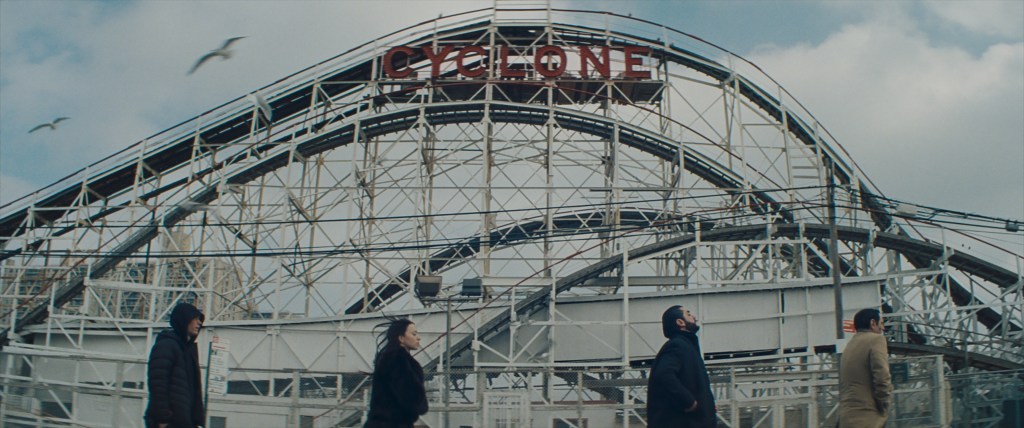
Thanks for reading this review! My next reviews are going to be for “Look Back,” “Piece by Piece,” “Saturday Night,” and “Megalopolis.” If you want to see these reviews and more from Scene Before, follow the blog either with an email or WordPress account! Also, check out the official Facebook page! I want to know, did you see “Joker: Folie à Deux?” What did you think about it? Or, what is the biggest step down in a franchise you have seen from a certain installment to the one that came after it? Let me know down below! Scene Before is your click to the flicks!