W. (2008): No Review Left Behind

Hey everyone, Jack Drees here! It is time for the second review in my Election Days series! Today we are going to be talking about “W.,” starring Josh Brolin. The film is about the life of the controversial leader George W. Bush. It features a stacked cast and is helmed by a filmmaker whose respectable track record includes other films having to do with U.S. politicians such as “JFK.” Does this 2008 film earn a Texas-sized thumbs up? Or does “W.” take the L? Here are my thoughts…

“W.” is directed by Oliver Stone (World Trade Center, JFK) and stars Josh Brolin (No Country for Old Men, American Gangster), Elizabeth Banks (Slither, Spider-Man), Ellen Burstyn (The Exorcist, The Last Picture Show), James Cromwell (Babe, The Artist), Richard Dreyfuss (Jaws, American Graffiti), Scott Glenn (Urban Cowboy, The Right Stuff), Toby Jones (Harry Potter and the Chamber of Secrets, The Mist), Stacy Keach (American Greed, Titus), Bruce McGill (Collateral, MacGyver), Thandiwe Newton (Mission: Impossible II, ER), and Jeffrey Wright (Angels in America, The Young Indiana Jones Chronicles). This film centers around the life of George W. Bush, the man who would become the 43rd President of the United States.

Like him or not, George W. Bush is an important U.S. President in my lifetime. Not because I agreed with his policies or because I liked him. Perhaps second to George Washington, maybe Abraham Lincoln, W. Bush is the earliest President I remember hearing about at some point in my life. Of course, with me being a child during the entirety of his two-term run, I did not immediately know the various aspects of his time in office that people talk about even today such as how he was President during the 9-11 attacks, No Child Left Behind, his response to Hurricane Katrina, his involvement in the Iraq War, and so on. The movie does not go deep into all of that, but it does not mean it is not a contained story. In fact, I would say I was surprised with how engaged I was with the film itself.

For the record, this is my second Oliver Stone film. I previously watched “Wall Street.” A film that I think does a really good job at capturing the hustle and bustle of the stock market and how much of a sport capitalism can be. So if you want me to compare this film to Stone’s other flicks involving U.S. Presidents, particularly “JFK” and “Nixon,” consider yourself disappointed. All I can say is that “W.” was better than I thought it would be. Though I really should not be surprised. It contains tons of great actors, moves at a brisk pace, and features several engaging characters.
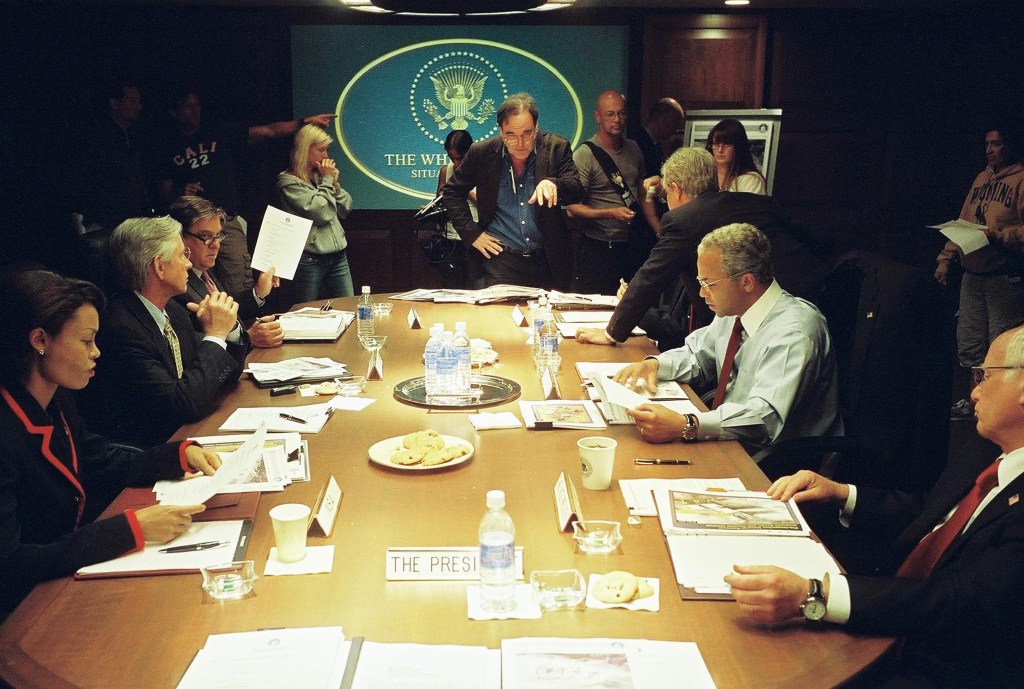
The one thing I will say though about this movie, is that I wonder how people who do not know anything about George W. Bush, his family, or maybe live outside the U.S. would take this film. This movie came out in 2008. W. Bush was still in office at the time, making this is a topical picture during its release. I will let you be the judge as to whether 16 years is a long time, but that is how long it has been since this film has come out. There are people in high school right now who were born around the time Barack Obama first became President. I am not going to pretend I have the strongest opinions on W. Bush’s time in office because as I said before, he was President during my youth. During that time in my life, I was more concerned as to when would the next time I was going to Outback Steakhouse as opposed to the state of the economy. The film dives into the days leading up to Bush’s decision to invade Iraq and I am sure even a number of younger people who may end up watching the movie today would probably have an opinion on it. But such a topic is probably not going to have the same impact on those who vividly remember living through that time in history. At times, this feels like a 2008 film that was specifically made for a 2008 audience. I am not insulting those audiences, just to be clear. Those same audiences also got to witness timeless cinema like “Wall-E” and “Slumdog Millionaire.” But would “W.” hit the same way for today’s generation? Hard to say.

That said, the film is still quite universal in its story. It dives into W. Bush’s relationship with his father, which I thought was one of the best parts of this movie. Even though W. Bush comes from a family with a storied legacy, his relationship with his father is something I think a lot of people can relate to. Because we all have parents, and deep down, most of us want to do anything that will keep us from breaking their hearts. The two have a steady connection, but it is not perfect. Nor is it without rules.

My favorite deep dive in the film has to do with George W. Bush’s relationship with alcohol. We see how much drinking impacts his life in terms of the choices he makes, how it affects his relationships with other people, and his overall stability. The movie tends to present alcohol as an obstacle that keeps W. Bush from potential success. We notice as W. Bush ages and becomes more accomplished, mainly in politics, he gives it up. The movie shows how much drinking holds W. Bush back and how him giving it up seems to correlate with his achievements.

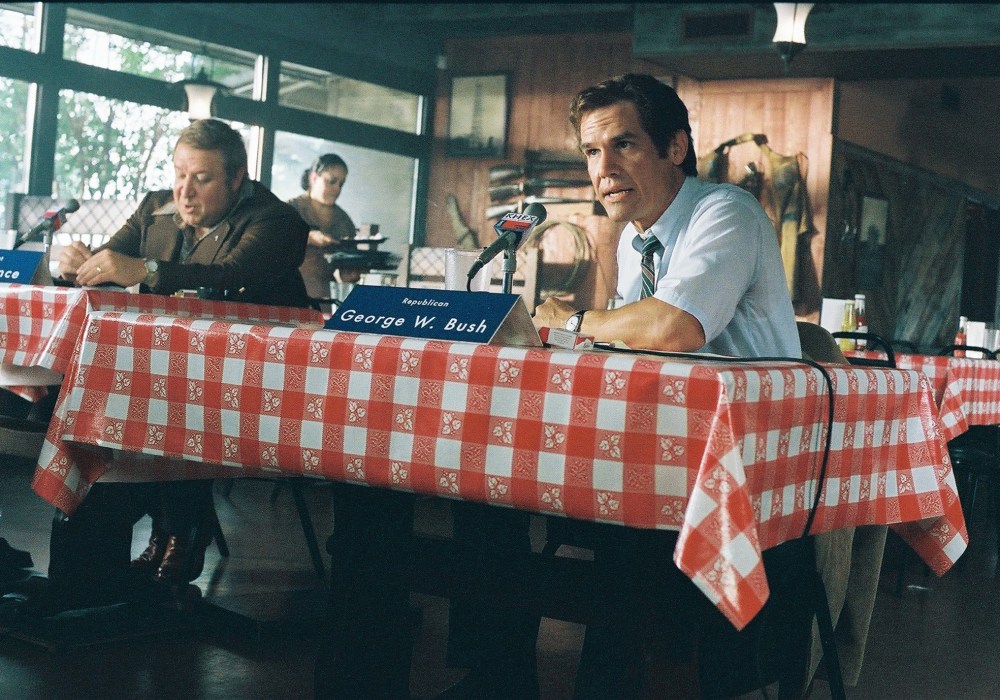
As for the performance of George W. Bush (right) himself, I have to say Josh Brolin did a good job in the role. Never once did I feel Brolin was trying to do an impression of the character. He kind of made the performance his own. He was bold in his presence and consistently commanding from scene to scene. Is it the greatest performance of a U.S. President in film history? No it is not. But to be fair, it is hard to compare with Daniel Day-Lewis as the lead of “Lincoln,” a film that came out four years later. In fact, during the same year “W.” was released, audiences were also treated to “Frost/Nixon,” and I would argue Frank Langella did an even better job as the titular leader in that film.

The supporting cast in this film also manages to put their best foot forward. Elizabeth Banks is a standout as Laura Bush. Richard Dreyfuss does a good job as Dick Cheney. And I thought James Cromwell as George H.W. Bush (right) was excellent casting. Across the board, I cannot name a single performance in “W.” I did not like.

But I have to give props not only to Josh Brolin for having the presence one would expect of a flawed but charming leader, but also to the writer of this film, Stanley Weiser, for bringing some decent material to the screen. Unfortunately, it is not all perfect. Despite the film never once feeling boring, it is a tad bewildering at times. The film comes off like I am in history class, and we are doing a unit on the Bush era of politics, whether that is W.’s time or his father’s, maybe with a brief cameo from Jeb here and there. But the unit does not have a clear path. It kind of jumps from place to place and it is not that organized. I guess in a way you can call “W.” a nicely laid out mess. Because I understand the film and what was presented to me. The final product did not melt my brain. I am just not sure if maybe the specific non-linear route the story took was as compelling as it was trying to be.

In the end, “W.” is not a movie I intend to watch again within the next year, but it is one I can definitely see myself revisiting at some point in my life. Again, I am a bit of a novice when it comes to Oliver Stone. “W.” just happens to be a third film in his trilogy revolving around U.S. Presidents. Given how I enjoyed “W.,” it makes me want to go back at check out “JFK” and “Nixon” should the chance ever come up. Is this movie for everyone? Probably not. It is about a controversial leader, so therefore I would not expect it to be for everyone. But it has the hallmarks of a good movie. Decent storytelling, good acting, solid production, and while it is a bit jumbled, I did appreciate Oliver Stone’s vision and what he brought to the table. I am going to give “W.” a 7/10.

“W.” is now available on DVD, Blu-ray, and on VOD. As of this writing, the film is available to stream on Peacock to all subscribers, and can be watched for free on Tubi, Philo, and the Roku Channel.

Thanks for reading this review! My next entry to the Election Days series is going to be for “On the Basis of Sex,” a film about Ruth Bader Ginsberg, the second woman to serve as an Associate Justice of the Supreme Court of the United States. If you want to see this review and more from Scene Before, follow the blog either with an email or WordPress account! Also, check out the official Facebook page! I want to know, did you see “W.?” What did you think about it? Or, do you have a favorite Oliver Stone film? Which of his U.S. President movies would you say is your favorite? Let me know down below! Scene Before is your click to the flicks!

Close Encounters of the Third Kind (1977): My First Contact with Steven Spielberg’s Sci-fi Classic

Hey everyone, Jack Drees here! Last year on Scene Before, in honor of the fifth anniversary, I promised everyone that I would spend months focusing on several themed review periods. This has lead to series including “Mortal Kombat: Finish the Reviews,” where I reviewed the 1995 “Mortal Kombat” film and its sequel, “Mortal Kombat: Annihilation.” I also did “Revenge of the Nerds Month,” where I reviewed all the movies in its respective franchise. Starting with “Revenge of the Nerds,” to “Nerds in Paradise,” followed by “The Next Generation,” and finally, “Nerds in Love.” I capped this charade off with “The Matrix Reviewed,” where I talked about “The Matrix,” “The Matrix Reloaded,” and “The Matrix Revolutions.” That was last year.

This year however, I have yet to review any older movies, or do any particular theme. Well, that changes. On November 11th, Steven Spielberg will release his latest film, the highly anticipated loosely based on true events tale, “The Fabelmans.” In honor of his latest film and his significant career, I figured it would be time to do a “Steven Spielberg Month.” For this review, we will be starting with “Close Encounters of the Third Kind.” It was my first time watching the film, and here are my initial thoughts.

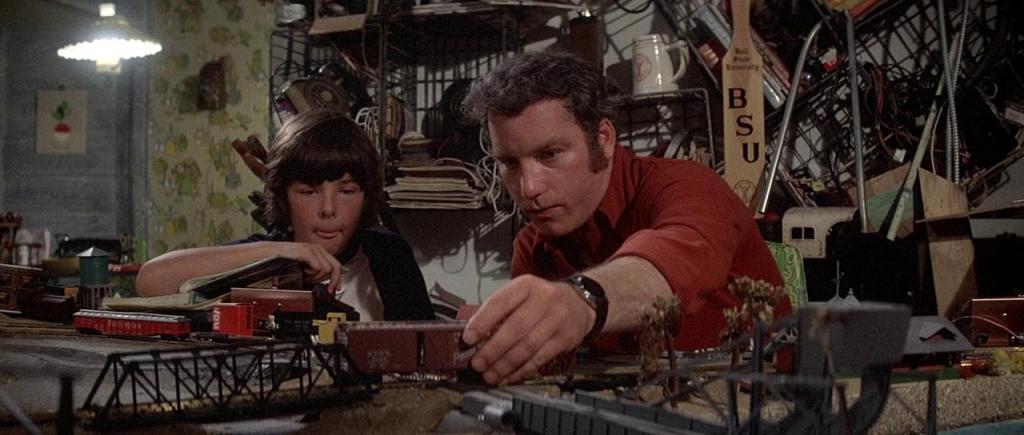
“Close Encounters of the Third Kind” is directed by Steven Spielberg and stars Richard Dreyfuss, Teri Garr, Melinda Dillon, and François Truffaut in a film about Roy Neary, an electric lineman who encounters a UFO. This incident enhances his curiosity as to the events this may lead to, which causes him to go cross-country to find out more.

For those who beg to ask, I am basing my review on the theatrical version of the film, which is the only cut I have seen. This review is based on my first contact, my initial close encounter, with “Close Encounters of the Third Kind.” I am sort of surprised it took me 22 years to watch this film, as I am a bit of a science fiction nut. In fact, just this year, the moviegoing masses received the latest film from Jordan Peele, “Nope,” which speaking of Spielberg, I compared to “Jaws” based on my experience with both films. “Nope” is not as good as “Jaws,” but content-wise, the two feel similar. If I watched “Close Encounters of the Third Kind” before seeing “Nope,” which I did not, I probably would have used that film as a device to compare to as well. After all, both films prominently feature aliens and if you read my review for “Nope,” I referenced that film “as the closest I think a director has come in some time to providing a Spielberg-like experience without the use of the actual Steven Spielberg.”

When it comes to “Close Encounters of the Third Kind,” I was kind of expecting some variation of “Jaws” but with aliens, as if an alien were to be a primal focus of the screen time. After all, again, Steven Spielberg directed both films. What I got out of “Close Encounters of the Third Kind” felt deeper, it felt more character-driven. This is not a diss on “Jaws” because that is a great film and the characters have likable personalities. But at the end of the day, when it comes to “Jaws,” I am mostly there to watch the shark do shark things while the humans deal with it. Obviously they have admirable backstories, but it goes to show how much I rooted for and related to the main character of Roy Neary. I am not an electric lineman, nor I do live in the midwest. That said, I found the character’s motivations aligning with mine and I felt for him throughout various occasions of the film, even if he is designed to look crazy.

After all, if I tweeted to the entire world, picture included or not, that I saw a UFO, it would generate a ton of reactions, at least one of which would involve someone calling me insane. I have watched stories where people faced alien life, the supernatural, or other similar concepts where the movie’s supporting cast to some degree might grow suspicious of the main character and think they are cuckoo. Only thing is, I know that as a third party observer, they are not. If anything this leads to this film’s biggest strength. Even though I am rooting for Roy Neary, there are one or two moments in this movie where he can come off as crazy. But much like a mad scientist potentially discovering the latest integration that could potentially be used for time travel, this craziness could also be marked as obsessiveness, which is why I find Roy Neary likable. He may come off as weird, but he is passionate about accomplishing his goal. I want the latter to be true for just about any protagonist.

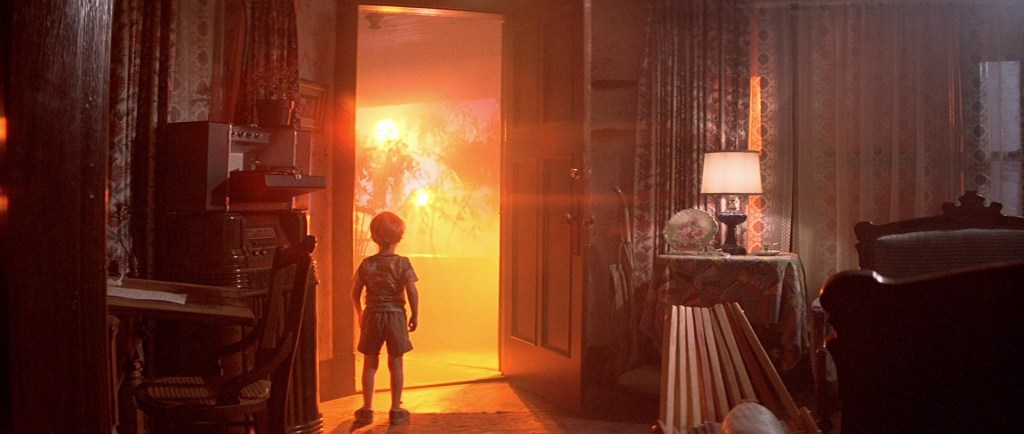
For good reason, this movie is about Roy Neary, but one of my favorite aspects of how this story is told is how they use a three year old boy as a curiosity mine. This is a perfect utilization. Children, perhaps stereotypically, are more curious than adults. Therefore it makes sense to have as much of a focus on three year old Barry as much as a grown adult like Roy. While “Close Encounters of the Third Kind” is more of a science fiction tale than a horror flick, Barry’s perspective brought hints of the latter genre to the table. There is a particular moment midway through the film that had me caught me slightly off guard not because of what I saw, but because of what I could not see. Film is a visual medium. Therefore, it is often expected for sight to be the most important and heightened sense within each edition of said medium. In today’s cinematic landscape where VFX-heavy films dominate, it is nice to see a film with an occasional sense of minimalism.

At the same time though, this should not take away from “Close Encounters of the Third Kind” as a visual spectacle. Partially because the film looks beautiful, even if there is another 1977 science fiction film that somehow surpasses it, specifically “Star Wars.” I watched this film on 4K Blu-ray, so therefore I also got to see the HDR transfer. Even though there are several scenes that take place at night, this film is not short on vibrant, visible color. The mothership in particular is one of the more awe-inspiring crafts in the entire science fiction genre. The variety of lit colors on the ship emit a poppy vibe even though it looks like the last thing you will ever see.

I should not be surprised that film looks as good as it does. The standard for shooting movies at this time was 35mm film, which has occasionally been used today for productions like “Once Upon a Time in Hollywood” and “The Northman.” Although I was delighted to know that this movie’s visual effects sequences were shot using 70mm film. The cinematography from Vilmos Zsigmond is clear and wide enough to pick up all the fine details. “Close Encounters” has a specialty where it is one the more rugged-looking sci-fi movies, but that makes it all the more beautiful. The movie relies on practical effects instead of computers, which is a smart choice. Forty-five years later, the movie’s appearance has aged like a fine wine.

I do not know when I plan on watching “Close Encounters of the Third Kind” again. It is not a bad film by any means, but I did not find it as memorable as other films in the sci-fi genre. At the same time though, this film feels like an achievement for the genre in the same way that “Star Wars” was in the same year. Technically speaking, it is breathtaking. Characteristically speaking, I admired just about everyone on screen. I would say if you have never seen the film, give it a watch sometime.

In the end, “Close Encounters of the Third Kind” is a solid movie that feels like a semi-realistic interpretation of what could happen if mankind ever encountered alien life. Some of us would be curious. Some of us would run. Some of us would want to get authorities involved. It all sounds legit. Kind of like the shark in “Jaws,” I came to “Close Encounters of the Third Kind” to see how it uses aliens in its story. Although I stayed to see human characters like Roy deal with an unfamiliar situation. The stay was certainly worth it. I am going to give “Close Encounters of the Third Kind” a 7/10.

“Close Encounters of the Third Kind” is now available in formats including VHS, Laserdisc, DVD, Blu-ray, and 4K Blu-ray. You can also rent or buy the film through Video On Demand or on various streaming services.

Thanks for reading this review! If you like this review, why not check out some of my other ones? Like my review for the most expensive Czech film of all time, “Medieval!” Also, be sure to check out my review for the brand new comedy, “Clerks III!”

My next review for the ongoing Steven Spielberg Month, which shall be posted on Friday, October 14th, is going to be for “E.T. the Extra-Terrestrial.” I have not watched this film in many years, so I feel like I am going in with a fresh perspective. I hope I am not disappointed. Also, stay tuned for my reviews for “The Post” and the 2021 remake of “West Side Story!” If you want to see this and more from Scene Before, follow the blog either with an email or WordPress account! Also, check out the official Facebook page! I want to know, did you see “Close Encounters of the Third Kind?” What did you think about it? Or, since it is related, did you see “Nope?” Tell me your thoughts! Let me know down below! Scene Before is your click to the flicks!