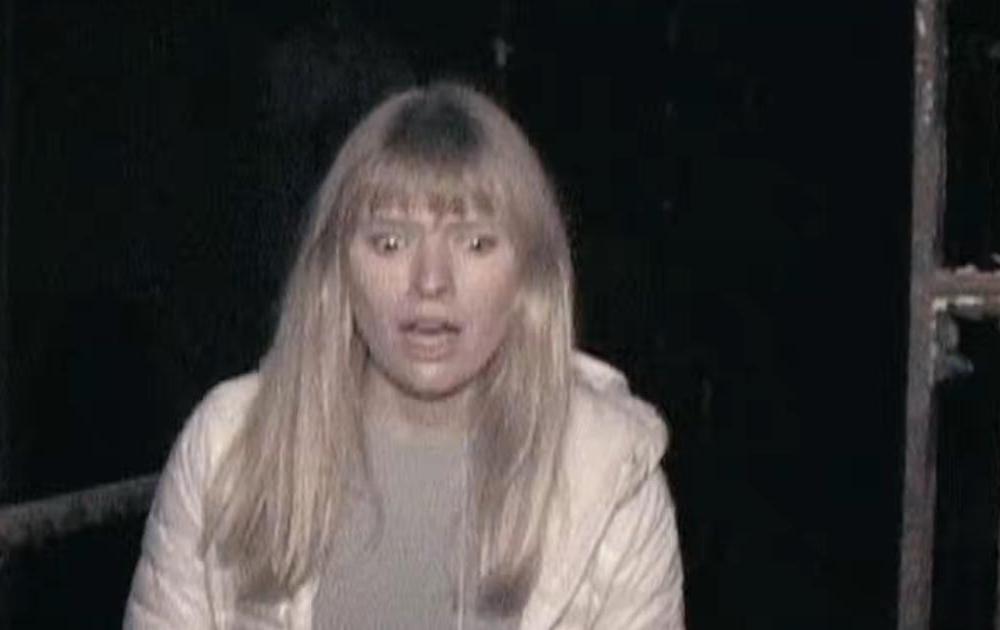
Shelby Oaks (2024): Chris Stuckmann’s Chilling Feature-Length Debut
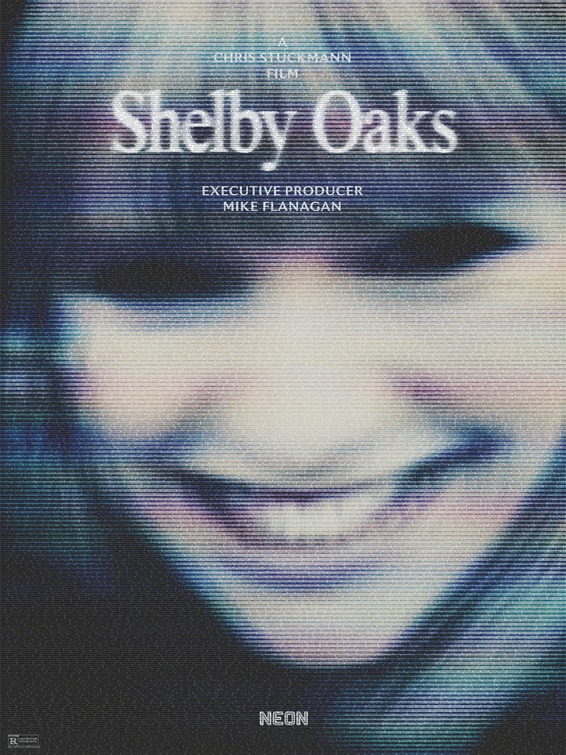
“Shelby Oaks” is written and directed by Chris Stuckmann (Notes from Melanie, Auditorium 6) and stars Camille Sullivan (The Man in the High Castle, Rookie Blue), Brandon Sexton III (Don’t Breathe, The Killing), Keith David (The Thing, Pitch Black), Sarah Durn (Where the Crawdads Sing, Carry-On), Derek Mears (Friday the 13th, Swamp Thing), Emily Bennett (Alone with You, City on a Hill), Charlie Talbert (Where the Crawdads Sing, Angus), Robin Bartlett (The Powers That Be, Mad About You), and Michael Beach (Saw X, Kingdom Business). This film is about a woman who is searching for her missing sister, with whom she previously made YouTube videos about the paranormal.

Before I begin my review for “Shelby Oaks,” I must preface by saying that there is potential for bias in what I am about to say. For those who do not know, this film is directed by Chris Stuckmann, one of the most popular film reviewers on YouTube. In fact, Chris Stuckmann, along with fellow YouTube critic Jeremy Jahns, are two of the biggest inspirations as to why I started critiquing films. As for Stuckmann, I happen to be in the same boat as him. While I love to talk about movies, I am also interested in making them. In fact, not to brag but I have taken my passion for film and media and turned it into something bigger. I work for a news station in Boston, and I made various shorts throughout high school and college.
To add extra potential for bias, I donated to this film’s Kickstarter campaign. I typically pay for the movies I review through movie tickets, physical media, subscription services, etc… But this is the first time I am reviewing a film whose budget literally comes from my own money.
As for my expectations for the film, I will be real… I was not sure what to expect. While I have seen a lot of social media marketing, I only watched the trailer one time in theaters, specifically before “Together,” which like this film, is from Neon. Was I excited? Sure. But I also did my best to keep myself from letting my expectations shatter the roof, as that only increases the chance of disappointment.
“Shelby Oaks” is responsible for making me spend more money on a movie prior to checking it out in the theater than any other, and I would say I made a worthwhile investment because I thought the film is quite good.

Is “Shelby Oaks” a perfect movie? No. But I did not leave this film thinking that Chris Stuckmann needs to stick to his dayjob on YouTube. That said, having watched his YouTube channel and getting to experience what he’s discussed for years, it did enhance my viewing. Stuckmann has established himself as a horror junkie, and it is clear that this is a passion project of his. The film reminded me of “Hereditary” for example due to its tone and lead performance. That film ended up being one of Stuckmann’s favorites of 2018.
The first ten, twenty minutes of the film, admittedly, caught me a little off guard. That whole segment is presented in the style of a documentary. You have interviews, b-roll, all that jazz. There are also several clips that feature YouTube in its older layout, which is not only a nice nostalgic touch, but also fits with the time in which part of this movie is set. It was also fun to see the creative comments sections and the fascinating user names listed there.

Camille Sullivan leads this film as Mia, and I did not know much about the actress leading up to this film’s release, but I am glad to know her name now. She carries this film in several scenes. Her performance, again, reminded me of Toni Collete’s in “Hereditary.” The performance here is not as powerful, but that is partially because “Shelby Oaks'” dialogue does not stand out as much as that of “Hereditary’s.” Granted, I do think this film does a great job at prioritizing visuals over dialogue. At times I felt like I was watching a “Quiet Place” installment. As for the dialogue that is in the film, I cannot say I found any lines that I outright despised. There are no lines that will go down amongst the greatest in history, but I thought overall, the dialogue was effective and helped in getting the characters from point A to point B.
Speaking of getting from point A to point B, I thought this film flew by. Granted, it is on the shorter side, but even with that in mind, it felt shorter than it was estimated to be. Maybe that is because of the film’s documentary approach in the beginning, which took up way more of the runtime than I anticipated. I have nothing against that portion of the film, but still. Even with the film flying by, almost each scene in the main feature feels incredibly drawn out. Each scene tends to take its time, which I have no problem with as they did a good job at drawing me in and immersing me into their respective environments. The film is shot on location, part of which includes the Ohio State Reformatory, the spot used for the prison in “The Shawshank Redemption.” While its lower budget definitely shows, the film’s effects, cinematography, and production design, all maintain a luster to them.
In terms of scares, “Shelby Oaks” reminded me of “Weapons,” which I found more tense than horrifying. It is a film that does not go overboard with any particular scare, although there are a fair amount of cliches in this film such as jumpscares. I am not traditionally a fan of jumpscares, but here they were used sparingly and were not too overly dramatic, which I did not mind.
Speaking of cliches, while this film does have an unusual structure, I found parts of it quite predictable. There is one particular scene where as soon as a certain person popped up, I knew pretty much where it was going, and lone behold, the end result was not much different from what I was expecting. Predictability is not exactly the most satisfying thing to see as a moviegoer, but at least everything in said scene appeared to fit into place.

When I first reacted to this film on social media, I spoke about the pace and how it reminded me of “Blade Runner.” I meant that as a compliment because, again, the film draws out its scenes to the point where they can sometimes feel slow. But by no means does that indicate that the scenes themselves are boring. In fact, I was wide awake for each scene. I cannot tell you everything that happens in each scene. If anything, the film does tend to weaken as it goes along to the point where some of the third act is rather forgettable. Even with that flaw in mind, it does not change how the setup of this film had me hooked. I was still onboard by the end, but less onboard if you will.
Speaking of the third act, I also found the film’s ending to be a bit haphazard. The ending does not break the movie. It does not ruin anything that came before. It does not fundamentally change the scope of the film for the worse, I just thought it was a bit abrupt. It is also kind of ironic because again, multiple scenes in the film feel drawn out. Yet when the movie gets to its ending, it is about as rushed as a TikTok video. This is not the worst ending I have ever seen. Not even close. But it kind of reminded me of “Kingsman: The Secret Service,” which outright refused to overstay its welcome once the climax finished.
What I am about to say next is probably not going to be a problem for many viewers, This is most definitely in nitpick territory but it is something that nevertheless caught my eye. This is probably going to to feel like déjà vu to those who just read my “Smashing Machine” review, I apologize, but bear with me… This film is presented in multiple aspect ratios. Granted, this is not the first time this has happened. Christopher Nolan for example has experience where he often swaps between traditional widescreen and the ratio of an IMAX screen. I have no idea how this film was assembled, but based on my presentation, it seems to have been assembled with a 16:9 aspect ratio in mind.
The film switches between three aspect ratios. There’s the movie footage, which is 2.39:1 widescreen. There’s the documentary footage, which is 16:9, or the traditional aspect ratio of a modern flat-screen television. And there’s the found footage, which is 4:3, or the aspect ratio of a traditional CRT television. Maybe I have to watch the film again in a different theater to see if anything changes, but given how much 2.39:1 footage there is, I am shocked how long I had to look at it on the screen and see two black bars from top to bottom. Maybe Stuckmann and crew tested this film on a wider screen and did not like how it looked, which, okay… I was not there. Maybe it looked ugly. But I found it weird to be watching this film in a theater, which traditionally sets up its screen for many different aspect ratios, and for a majority of the film, I was looking at black bars. I have a feeling this is an artistic choice, and I think it is one that could suit the home market given how most people watching this at home will likely watch this on a 16:9 screen. But I am curious to know how this film would have looked had it been designed for a wider screen. Funny enough, the movie is executive produced by Mike Flanagan, who directed one of my favorite films of the year, “The Life of Chuck.” That film also features changing aspect ratios. I wonder how much he and Stuckmann discussed this matter, and if one person seeing the other’s work had an effect on the look of either film.

In the end, despite some flaws, I was riveted by “Shelby Oaks.” It is not destined to become the next all-time classic, but it is a solid horror flick with a likable protagonist. This is the first feature film from Chris Stuckmann, and I am happy he was able to get his vision out there. It is a vision that sometimes comes with a rushed, albeit intriguing script. It is a vision that comes with some minor pacing problems, despite a multitude of well-timed sequences and scares. It is a vision that comes with a middle of the road at best ending, but not one that damages the positive moments that happened prior. I am not saying Chris Stuckmann should avoid writing more films. In fact, he sometimes has a knack for creating a decent scene. That said, I would love to see what he could do if he were to put the pen down and focus on directing something from another writer. That said, if Chris Stuckmann has something else up his sleeve, sign me up. I am going to give “Shelby Oaks” a 7/10.
“Shelby Oaks” is now playing in theaters and is now available to rent or buy on VOD.

Thanks for reading this review! My next review is going to be for Guillermo del Toro’s “Frankenstein.” Stay tuned! Also coming soon, look forward to my thoughts on “Good Fortune” and “The Running Man.” If you want to see these reviews and more from Scene Before, follow the blog either with an email or WordPress account! Also, check out the official Facebook page! I want to know, did you see “Shelby Oaks?” What did you think about it? Or, have you watched Chris Stuckmann on YouTube? What are your thoughts on his channel? And lastly, who’s your favorite movie critic? …Actually, don’t answer that, you all know it is me. Eat your heart out, Roger Ebert! Let me know what your thoughts are in the comments! Scene Before is your click to the flicks!




 Scene Before